LookAmaze

Introduction

Health and wellness usually gets sold as a list of separate problems. Sleep over here, food over there, stress somewhere else entirely. In practice they lean on each other, which is why one-topic advice so often contradicts the next.

This page is the front door to LookAmaze’s Health & Wellness section. It explains what the eight areas below cover, how they connect, and where to start. There is no diagnosis here — each section links out to the article that goes deeper. And where a claim rests on medical evidence, the source sits right beside it so you can check it yourself. Read the whole page if you are starting fresh, or jump straight to the area that matches your problem.

How the 8 areas fit together

These eight areas overlap more than they divide, and the overlaps are where most of the practical answers sit. That is worth a minute before you open any one section.

Start with sleep. It sits underneath almost everything else. Run short on it and appetite shifts, mood flattens, focus goes, and small problems start to feel large. The US Centers for Disease Control and Prevention links insufficient sleep to chronic conditions including type 2 diabetes, heart disease and depression (CDC), and the National Heart, Lung, and Blood Institute explains how your body clock decides when you sleep (NHLBI). Improve sleep and several other problems tend to ease as a side effect.

Eating and digestion are a pair. What you eat shapes how you feel after a meal, and how well you digest shapes what you are willing to eat next time. Fibre shows the loop clearly — it is the part of plant foods your body cannot fully break down, and it helps both bowel regularity and blood sugar and cholesterol (Mayo Clinic).

Your gut talks to your brain as well. Harvard Medical School’s health publication calls the two intimately connected, which is why stress so often lands in your stomach (Harvard Health).

Immunity is not a supplement you buy. It runs on sleep, food, movement and stress — the unglamorous inputs. The NIH Office of Dietary Supplements sets out what the evidence actually supports (NIH ODS).

None of it holds without routine, and consistency matters more than intensity. Physical activity guidance is blunt about this: some movement beats none, and the weekly total matters more than any single session (World Health Organization).

These areas affect each other in ordinary, everyday ways. A short night makes the next day’s food choices worse. A stressful week changes what your stomach does. Uncomfortable digestion makes you eat less of the things that would help. Hardly anything here happens in isolation, which is why a change in one area often shows up as an improvement in another.

Women’s and men’s health are not separate systems either. Hormones, muscle mass, metabolism and stress responses shift with age and differ by sex, which is why this section keeps dedicated guides instead of pretending one size fits everyone.

What this section covers

Here are the eight areas. Each one says what it is for and points you to the main article, so you can go straight to the depth you need.

Healthy Eating

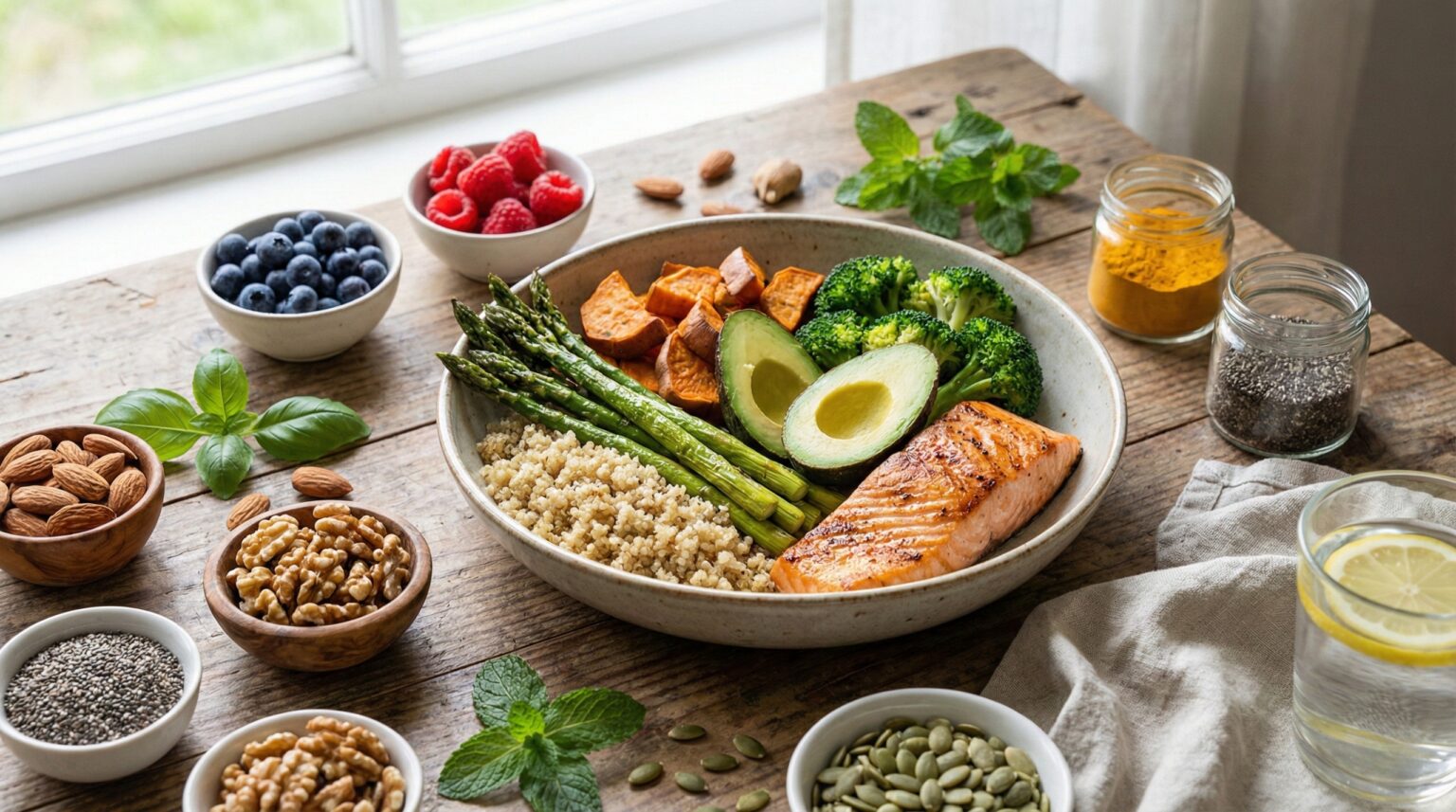
Grilled chicken, quinoa salad, sweet potato, avocado, vegetables, nuts and fruit on a kitchen island

What a balanced diet looks like in practice, how to read a label, and how to eat well without giving up food you like. The basics article covers whole foods, protein, fibre, fats and hydration, and the current Dietary Guidelines for Americans describe the wider pattern this section follows (Dietary Guidelines). Start here: Healthy Eating Basics: What a Balanced Diet Really Looks Like. If label claims leave you squinting, how to read the Nutrition Facts panel is the practical companion.

Gut & Digestion

How digestion works, what symptoms can and cannot tell you, and when something deserves a doctor rather than a home remedy. For the mechanics, the NIDDK explains your digestive system and how it works (NIDDK), and Johns Hopkins Medicine covers the brain-gut connection (Johns Hopkins). Start here: Digestive Health: A Guide to Your Gut and When to Get Medical Help. For bloating, gas and heartburn specifically, see what can help at home and when to see a doctor.

Daily Wellness

woman stretching indoors morning wellness routine

The small repeatable routines that quietly set the tone for everything else — light, movement, meals, water, winding down. Start here: The Minimum Effective Daily Wellness Routine, which strips a routine down to the smallest version that still works.

Sleep Improvement

Why timing and quality matter more than raw hours, and what actually moves them. The American Academy of Sleep Medicine’s healthy sleep habits are a sound baseline (AASM). Start here: Afternoon Slump: Why You Crash Midday and How to Fix It Without More Coffee. Still exhausted after a full night’s sleep? Read why you are still tired after 8 hours. If evenings are the problem, start with evening routines that improve sleep.

Home Remedies
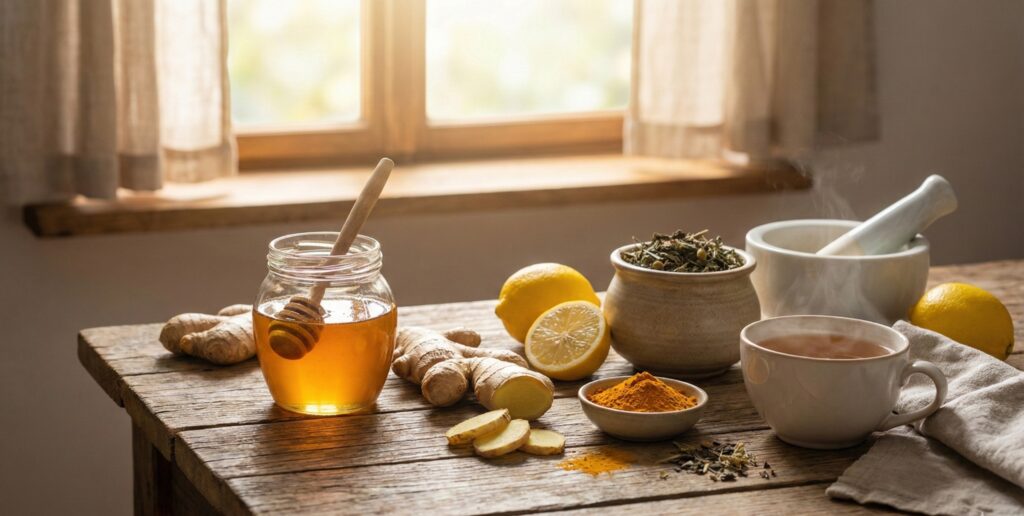
natural home remedies with honey ginger and turmeric

What simple household measures can reasonably do — and, just as often, what they cannot. This section stays deliberately cautious. The NIH National Center for Complementary and Integrative Health notes that oral ginger can cause side effects including abdominal discomfort (NCCIH), and that probiotics have particular uses and safety questions rather than broad benefits (NCCIH). Start here: Home Remedies for Minor Symptoms: What Can Help — and When to Get Medical Care.

Immunity

What genuinely supports immune function, and what is marketing. The evidence is strongest on the basics: the NIH Office of Dietary Supplements reviews which nutrients matter and where claims outrun the data (NIH ODS), and Harvard’s Nutrition Source lands in much the same place on nutrition and immunity (Harvard Nutrition Source). Start here: Can You Really Boost Your Immune System? What Actually Helps. For the food side, see the best foods for your immune system.

Women's Health

Cycle changes, period pain, shifts in digestion, and how long-running stress can hit women differently. The American College of Obstetricians and Gynecologists explains the role of prostaglandins in painful periods (ACOG) and what heavy or abnormal bleeding is worth raising with a doctor (ACOG). Start here: Women’s Health: What This Section Covers and When to Get Medical Help. For cycle symptoms specifically, see period problems that need attention.

Men's Health

Muscle mass, testosterone, metabolism, and the checks men tend to put off. The Endocrine Society notes that low testosterone is associated with reduced muscle mass and strength (Endocrine Society), and Cleveland Clinic explains how metabolism works and why it changes (Cleveland Clinic). Start here: Men’s Health: What This Section Covers and When to Get Medical Help. For strength, see muscle loss after 30 in men.

Which guide should you read first?

Most people arrive with a symptom or a goal, not a category. Use this list.

You wake tired, or crash mid-afternoon. Start with the afternoon slump, then still tired after 8 hours.

Bloated, gassy, or uncomfortable after meals. Start with gas, bloating and heartburn, then what digestive symptoms can and cannot tell you.

Always catching colds and wondering what helps. Start with what actually helps your immune system, then the food evidence.

Eating reasonably, but want the basics right. Start with healthy eating basics, then eating well without giving up foods you enjoy.

Want one change that lifts several things at once. Start with the minimum effective daily wellness routine.

Period pain, cycle changes, or a shift in digestion. Start with the women’s health guide, then period problems.

If you are a man noticing changes in strength, energy or weight. Start with the men’s health guide, then low testosterone signs.

When medical advice matters

None of this replaces a clinician. Some symptoms should not wait for a home experiment.

Chest pain is the clearest example. It must never be assumed to be reflux (NHS). Needing heartburn medicine more than twice a week is itself worth discussing (Mayo Clinic). Persistent or severe stomach pain, unexplained weight loss, blood in your stool or vomiting should be assessed rather than managed at home (NHS).

For women, heavy or abnormal bleeding, and pain that interferes with daily life, are worth raising rather than tolerating (ACOG). For men, persistent fatigue, mood changes or lost strength can have causes worth testing instead of guessing (Endocrine Society).

Sleepiness is a safety issue, not just an annoyance. The American Academy of Sleep Medicine documents the risks of driving while drowsy (AASM). Chronic stress has physical effects too, described by the American Psychological Association (APA) and by Harvard Health on the stress response (Harvard Health).

How to use this section

Treat this page as a map you come back to rather than something to read once. Pick the area closest to your problem, read the linked article, and give the change a few consistent weeks before deciding whether it helps. Almost nothing here is dramatic. Most of it is cumulative, which is why one change held for a month usually tells you more than five started at once.

Be careful with supplements and “detox” products. Regulated claims on labels mean specific things (FDA), and the NIH’s complementary health centre maintains that cleanses are not supported as necessary for health (NCCIH).

Final Thought

Health is rarely one decision made once. It is mostly ordinary choices, repeated often enough to matter. The point of this section is not to make you perfect — it is to help you find the few changes that fit your life and keep them, with sources you can check and clear guidance on when to see a doctor instead.

Start with whatever is bothering you most. The rest tends to follow.

Middle-aged man in an olive jacket standing in a coastal landscape at sunset

This page is the starting point for the men’s-health guides on this site. It explains what this section covers, why men’s health concerns differ from person to person, which of the three deeper guides to read for your concern, and when a symptom is worth taking to a doctor rather than to another article. It is an orientation — not a diagnosis, and not a substitute for medical advice.

Men's health is not one single experience

Men’s health is easy to oversimplify, and many articles do. Health questions can differ with age, medical history, symptoms, medications, lifestyle, and individual circumstances. Two men of the same age can face very different concerns, and advice that helps one man may be irrelevant to another.

For broader government health information on different men’s-health topics and life stages, the U.S. National Library of Medicine’s MedlinePlus Men’s Health page is a useful starting point.

What this section currently covers

Right now this section contains three focused guides on specific men’s-health concerns: low testosterone, metabolism changes as men get older, and muscle and strength changes after 30. Men’s health is broader than these three topics — but this is the honest current scope of the section, and more topics may be added over time. Each guide answers one particular question, so the most useful thing you can do is find the one that matches yours.

Which guide should you read?

Low testosterone questions

If you’ve wondered whether low testosterone could be behind changes you’ve noticed, the guide to low testosterone in men covers which signs deserve attention, what testing involves, and when to see a doctor. Read it if that question is yours and you want to know whether testing is worth raising with a professional.

Metabolism changes as men get older

If you’re past 30 and have heard conflicting claims about whether metabolism slows down as men age, the guide to metabolism changes in men looks at what actually changes, which “boosters” are myths, and when symptoms deserve a doctor’s attention. Read it if you want a clearer picture before acting on any of it.

Muscle and strength changes after 30

If you’ve noticed muscle or strength changes as you’ve gotten older and aren’t sure what’s typical, the guide to muscle loss after 30 in men looks at why it happens, what genuinely helps, and when weakness deserves a doctor’s attention. Read it if you’re trying to understand your own changes rather than guess.

When medical advice matters

There is no single checklist that works across every symptom, age, or medical situation — which is part of why this page is a guide to the section rather than a diagnosis tool. The right threshold for getting help depends on the symptom, your age, and your personal medical context.

As a general rule, symptoms that are severe, worsening, persistent, recurrent, or genuinely worrying are better assessed by a qualified professional than by continued self-reading. And if you think you may be having a medical emergency, use your local emergency service rather than relying on information on this site.

How to use this section

If your concern matches one of the three guides, start there — each guide works on its own, so you don’t need to read this page first. If your question isn’t covered here yet, or a symptom is worrying you, the section above is the short answer: a doctor or nurse is the right person to judge it. This page exists to help you understand what this men’s-health section can and can’t do for you, so you can decide your next step without chasing generic wellness advice.

woman enjoying fresh air for immunity

Search for “how to boost your immune system” and you’ll find a thousand miracle foods, drinks and supplements. The honest version is less exciting and more useful: you can’t dial your immune system up like a volume knob, but you can genuinely support it.

Your immune system is a complex, finely balanced network. It needs the right support to do its job — and the evidence for that support is real: sleep, food, movement, stress management, and vaccines. This article separates what actually helps from what’s just marketing, and explains when “getting sick often” is worth a doctor’s visit.

Can You Really "Boost" Your Immune System?

Not the way most people imagine. The immune system isn’t a muscle you can pump up, and a healthy one doesn’t need “boosting” — it needs the right support to keep working normally.

That doesn’t mean healthy habits are pointless. The U.S. Centers for Disease Control and Prevention (CDC) is clear: you can strengthen your immune system by eating well, being physically active, and maintaining a healthy weight — along with getting enough sleep, not smoking, and avoiding excessive alcohol.

And the National Institutes of Health (NIH) notes that immune systems are complex networks influenced by many factors — which is exactly why “one magic pill” claims deserve suspicion. The useful question isn’t “how do I supercharge my immunity?” It’s “what genuinely supports it?” That’s what the rest of this article answers — with the evidence, not the marketing.

What Actually Supports Immune Health

A few basics are worth getting right:

  • Sleep– Getting enough sleep is part of normal immune function, per the CDC.
  • Regular movement- Physical activity supports overall health and may benefit immune function.
  • A balanced diet- Nutrient deficiencies can impair immunity, so eating well matters.
  • Managing stress- Ongoing stress can make sleep and healthy routines harder.
  • Not smoking- and keeping alcohol moderate. Smoking and heavy drinking are harmful to the immune system.
  • Vaccination- It trains your immune system against specific diseases (more on this below).

None of this “supercharges” anything. It supports normal function — which is exactly the honest goal.

Food and Nutrition: What Actually Matters

immune boosting foods with vegetables

Here’s the simple version: enough matters. More isn’t automatically better.

Your immune system needs certain nutrients — like vitamin C, vitamin D, zinc, iron and selenium — to work properly. If you’re short of them, immunity can suffer. That’s about avoiding deficiency, not about eating “immune foods,” as Harvard’s Nutrition Source explains.

No single food, spice or “superfood” has been shown to boost immunity on its own. Turmeric, ginger and garlic are wonderful in food — enjoy them as flavour, not as medicine. Don’t rely on special juices, shots or individual “superfoods” as substitutes for an overall nutritious diet.

What the evidence does support is an overall nutritious diet: vegetables, fruit, whole grains, protein, and healthy fats — the same pattern that supports the rest of your health. Gut health fits in here too: the gut microbiome and immune system interact, and a varied, fibre-rich diet can support beneficial gut microbes. No magic percentage, no single miracle food — just a good diet, most of the time.

Supplements: What the Evidence Really Says

The honest headline: a nutrient being needed for immunity doesn’t mean extra amounts boost immunity in someone who already gets enough. The National Institutes of Health puts it plainly — in the absence of deficiency, routine supplementation probably does little to prevent or treat specific infections.

Here’s what the evidence actually says about the popular ones:

Vitamin C

  • Regular supplementation does not meaningfully prevent colds in the general population, per Cochrane.
  • Among people who take it regularly, colds that occur may be modestly shorter.
  • Starting it only after symptoms begin has not shown consistent benefit.
  • High vitamin C intakes can cause stomach-related side effects such as nausea, cramps or diarrhea, according to NIH ODS.


Vitamin D

  • Low vitamin D can matter for health and immune function. Studies of supplementation for preventing respiratory infections have produced mixed results, with some evidence of greater benefit in people with low vitamin-D status, per the National Institutes of Health.
  • That is not a reason for everyone to take high-dose vitamin D.
  • If you’re concerned about deficiency or considering high-dose supplements, speak with a healthcare professional.

Zinc

  • May shorten an existing cold somewhat, but the evidence is uncertain.
  • It does little or nothing for prevention, per the current Cochrane review.
  • Higher zinc intakes can cause side effects, and taking too much over time can reduce copper status, per the NIH Office of Dietary Supplements. Zinc can also interact with some medicines. (No dose is prescribed here — that’s a conversation for a healthcare professional.)

Probiotics

  • Different strains are different products; evidence for one strain doesn’t automatically apply to every probiotic, as the NIH Office of Dietary Supplements explains.
  • They’re not general “immunity boosters.”
  • People who are seriously ill or have weakened immunity should be especially careful with probiotics, per the NIH Office of Dietary Supplements.


Herbal products

  • Evidence varies widely between herbal products, and results for one product cannot be applied to every herb or supplement. Herbal products should not be treated as general “immune boosters,” per the National Institutes of Health.
  • Some can also interact with medicines, so check with a pharmacist or healthcare professional if you use supplements regularly.
    The short version: if a deficiency is real, fixing it helps. If you’re already well-nourished, an expensive supplement is usually money better spent on food and sleep.


Sleep, Stress and Movement

woman sleeping for immune recovery

These three deserve their own section because they’re the habits with real, everyday impact.

Sleep is important for normal immune function — the CDC notes that sleep loss can negatively affect the immune system. Most adults do best with seven to nine hours, per Harvard’s Nutrition Source; the exact number varies from person to person.

Movement matters too. Regular physical activity supports overall health and may benefit immune function — no need for extremes. A consistent routine you can keep up beats an intense one you quit.

Stress is worth taking seriously, but without a fake mechanism. Ongoing stress can disrupt sleep and healthy routines, and it has been associated with changes in immune function, per Harvard’s Nutrition Source. Managing it — whatever works for you: walks, breathing, talking to someone — is part of supporting your health, not a trendy add-on. If you want the full picture of how stress shows up in your body and mind, our mental-health article walks through it.

How Vaccines Fit In

accines deserve a clear place here, because they’re one of the most evidence-based ways to protect against specific diseases.

Healthy habits support general health and immune function. Vaccines train the immune system to recognize specific diseases, so it can respond quickly if it meets them — the CDC describes vaccines as building immunity against specific diseases.

These aren’t competing options. Eating well doesn’t replace a flu vaccine, and a vaccine doesn’t replace sleep. They work together: healthy habits support general health and immune function, while vaccines provide targeted protection against specific diseases.

When to See a Healthcare Professional

Getting sick occasionally is normal. But some patterns are worth a conversation with a doctor: infections that keep coming back, are unusually severe or long-lasting, are difficult to treat, or you repeatedly develop serious infections such as pneumonia. Mayo Clinic describes infections that are more frequent, longer lasting, or harder to treat as a pattern that deserves medical evaluation.

One important note: frequent infections have many explanations, and they do not automatically mean you have a “weak immune system.” Only a healthcare professional can assess that, with proper tests. If you’re worried about how often you get sick, don’t reach for more “immune boosters” — talk to a doctor.

The Bottom Line

You can’t supercharge your immune system, and no food, drink or supplement will do it for you. What you can do is genuinely support it: sleep enough, move regularly, eat well, manage stress, don’t smoke, and keep up with recommended vaccines.

Skip the miracle claims. Do the boring things that work. And if you’re getting sick in a way that doesn’t feel normal — often, severely, or without recovering — get it checked rather than guessing.

That’s the honest version of “boosting your immune system.” It’s less magical, but it’s grounded in evidence.

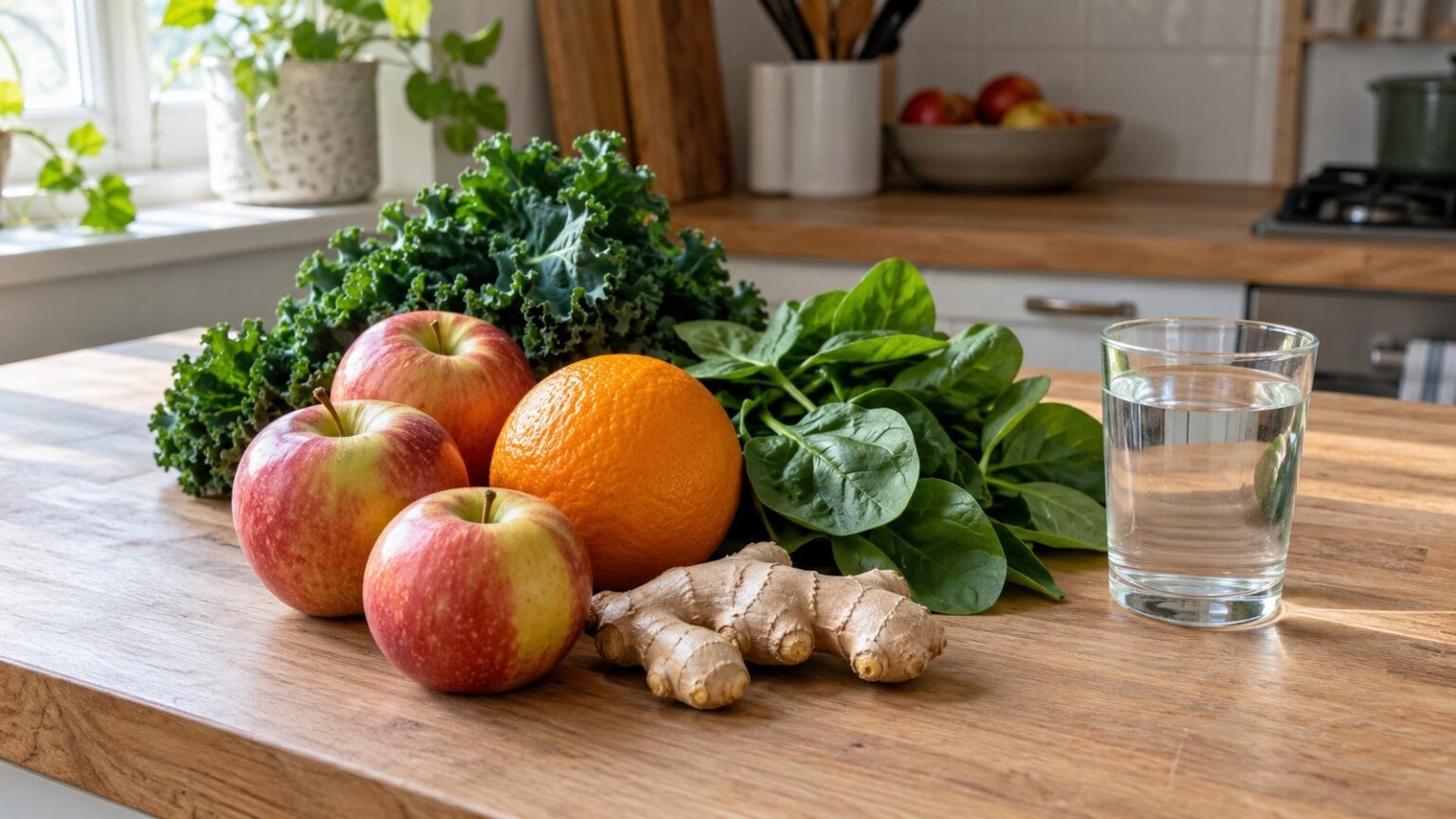
Apples, an orange, ginger, kale and spinach on a wooden kitchen counter beside a glass of water in natural window light

If your digestion has been sending signals you’re unsure about — bloating after meals, heartburn that keeps showing up, or a change in your usual bowel habits — you may be wondering what to do next: wait and see, read up, or ask a doctor. This page is a good place to start. It explains what digestive health means, the questions this site’s gut-health guides answer, and when a symptom deserves medical advice rather than self-management.

What "digestive health" actually means

3D illustration of the inside of the intestine showing bacteria

Digestion is the process of breaking food and drink into smaller parts your body can absorb and use, while moving waste through the digestive tract (your digestive system and how it works). When people talk about “digestive health,” they usually mean this process doing its job day after day — without constant pain, bloating, or disruption.

There’s no single perfect version of a healthy gut, and a well-working digestive system doesn’t guarantee glowing skin, endless energy, or a stronger immune system. Those outcomes are not reliable measures of digestive health. Your gut also hosts a large community of microorganisms, and researchers are still learning how these microbes relate to health (probiotics: usefulness and safety). What matters most is your own pattern: what’s normal for you, and what has changed.

The digestive questions this section covers

This section is organised around a few practical questions: what can help with gas, bloating, or heartburn; whether recurring symptoms mean something is wrong; whether habits like drinking warm water matter; how digestion changes with age; and which foods genuinely support digestion. None of the guides on this site diagnose conditions, and neither does this page. Each guide explains what is known, what is unproven, and when a symptom is worth checking with a doctor.

Which guide should you read?

The five guides below each answer one specific question. If you know your concern, jump straight to its guide.

Bloating, gas, or heartburn that keeps coming back

If gas, bloating, or heartburn is the issue, the guide to gas, bloating and heartburn home care walks through what can reasonably be tried at home and when self-care is no longer the right next step. Read it if these symptoms bother you often enough that you’d like a clear sense of what to try — and when to stop self-managing.

Wondering whether something is actually wrong

If recurring digestive symptoms have left you wondering whether something is wrong, the guide to what your digestive symptoms can and can’t tell you looks carefully at what symptoms do and don’t mean and when a doctor’s opinion is worth seeking. Read it if you keep asking yourself “is this normal?

The warm-water question

If you’ve heard that warm water is better for digestion than cold water, the guide on warm vs cold water and what the evidence actually shows looks at that question directly. Read it before changing a habit based on a claim you’ve heard online.

Digestion that has changed as you’ve gotten older

If your digestion feels different as you’ve gotten older, the guide on how digestion changes with age and what actually helps looks at that question in detail. Read it if you’re middle-aged or older and your digestion doesn’t feel the way it used to.

What should you eat for digestion?

If food is your main question, the guide to which foods genuinely help digestion reviews the everyday food choices that have useful evidence behind them and the claims that deserve more caution. Read it if you want food direction that doesn’t depend on fads. 

When a symptom deserves medical attention

Some digestive symptoms deserve medical advice rather than continued self-management. Examples worth checking with a doctor or nurse include blood in your stool, unexplained weight loss, pain that doesn’t go away or keeps returning, or diarrhoea that doesn’t go away after a few days. These symptoms can have many causes; the point is that they deserve medical assessment rather than guesswork. If abdominal pain comes on suddenly or is severe, seek urgent medical care.

The NHS’s stomach ache guidance lists similar reasons to get medical advice, and you’ll find a fuller discussion of which symptoms matter in the symptoms guide earlier on this page.

How to use this section

If you know your concern, pick its guide and start there — each guide works on its own, so you don’t need to read this page first. If you’re unsure what your symptoms point to, the symptoms guide is a good first stop. And if you came here wondering whether to see a doctor, the section above is the short answer: when you’re genuinely worried about a symptom, asking a qualified healthcare professional is a reasonable next step. This section is a set of honest guides, not a diagnosis service — its job is to help you understand your body well enough to know what to do next.


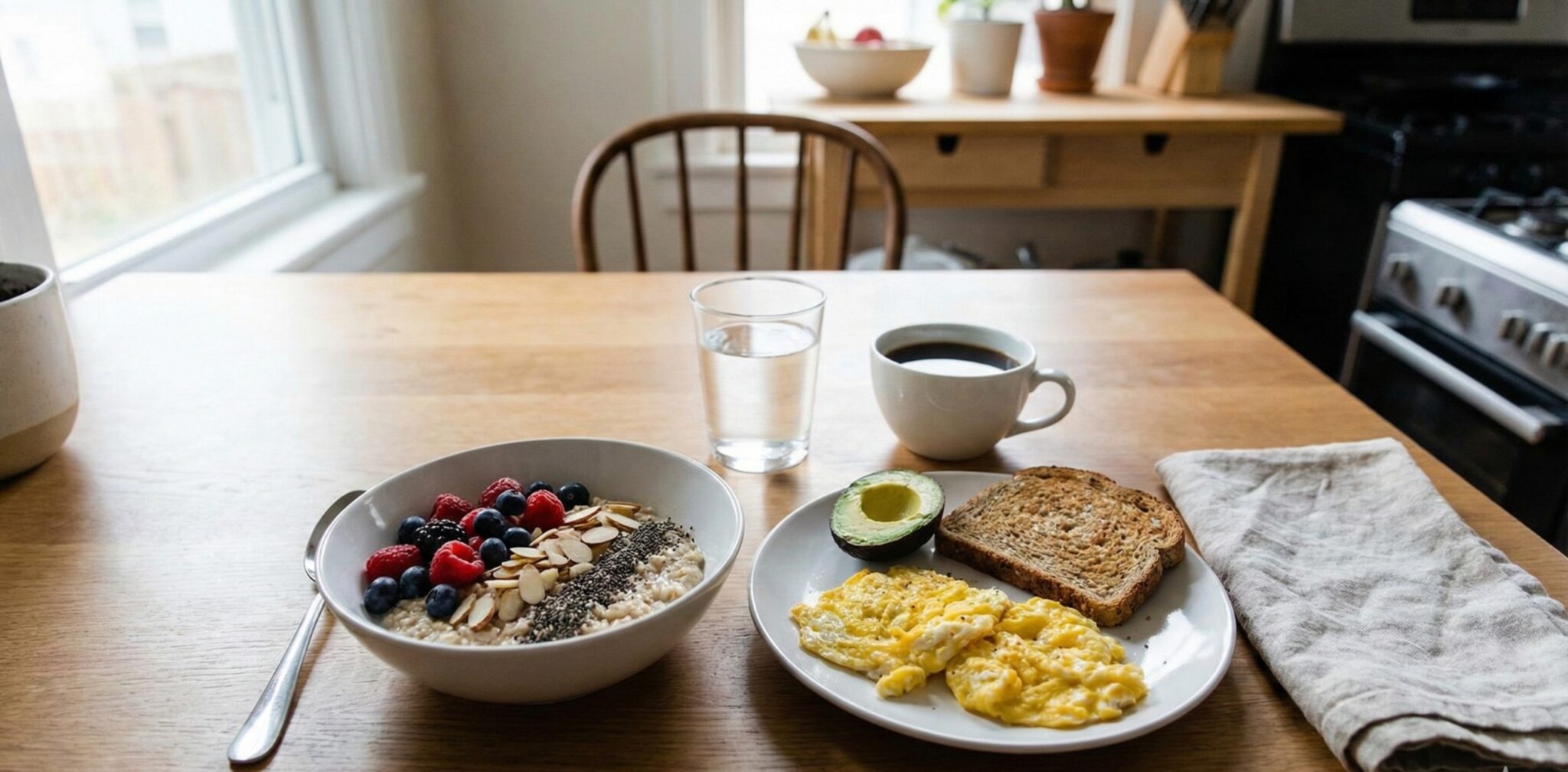
Oatmeal with berries, scrambled eggs, whole-grain toast, avocado, water and coffee on a wooden table

Healthy eating has a reputation problem. It sounds like a project — meal plans, calorie apps, lists of rules. But in practice it is much simpler: healthy eating is the food you reach for most days, and most of us already know roughly what that should look like. We just rarely stop to picture it clearly.

This guide focuses on the basics: what the main food groups contribute, which choices current guidance prioritizes, and how they can fit together in ordinary meals. Think of it as the plain-language version of what eating well actually looks like day to day.

What healthy eating actually means

Grilled chicken, quinoa salad, sweet potato, avocado, vegetables, nuts and fruit on a kitchen island

Healthy eating is a pattern, not a single meal and not a single “superfood.” A salad at lunch is good, but it is the meals you choose across a week that shape how you eat.

A useful way to think about food is how much it gives you per calorie. Vegetables, fruit, whole grains, beans, eggs, fish, lean meat, dairy and nuts carry a lot of the vitamins, minerals, protein and fibre your body actually uses. Foods such as sweets, sugary drinks and many highly processed snacks can contribute substantial calories, added sugars or sodium without the same concentration of useful nutrients as more nutrient-dense choices. Eating well mostly means letting the more nutrient-dense group lead.

Build around nutrient-dense foods

The current Dietary Guidelines for Americans — the federal government’s evidence-based advice — describe a healthy pattern built from the same broad groups year after year: vegetables, fruit, whole grains, protein foods, dairy or alternatives, and healthy fats. Notice what that list does not include: no exotic ingredients, no single miracle food, nothing you have to order online.

The groups are simple to understand. Vegetables and fruit supply vitamins, minerals and fibre. Whole grains give you carbohydrate along with the fibre and nutrients that heavily refined versions have lost. Protein foods — beans, lentils, eggs, fish, poultry, lean meat, nuts and seeds — help build and maintain body tissue. Dairy, or fortified alternatives, provides protein and calcium. And fats from oils, nuts, seeds, avocado, seafood, eggs and dairy are a normal part of the diet.

Make vegetables and fruit easy to repeat

Vegetables and fruit earn their place in every healthy pattern, so it is worth making them easy to reach for. If including them regularly is difficult, convenience matters: keep easy options around and they become simpler to use.

Keep a bag of frozen vegetables for nights when fresh ones have gone sad in the drawer. Buy whatever fruit is in season — it usually tastes better. Add a handful of spinach to the pan when you cook eggs or pasta. Put fruit where you will see it, not hidden at the back of the fridge. Frozen and canned options can be useful too; when relevant, choose canned vegetables with less sodium and fruit with little or no added sugar.

The aim is simply to make vegetables and fruit a regular part of the overall pattern.

Choose whole grains more often

Grains are not the enemy, and anyone telling you to cut carbs has oversimplified a fairly simple topic. The useful distinction is between whole grains and heavily refined ones.

Whole-grain versions of everyday foods — whole-wheat bread and pasta, brown rice, oats — still contain the whole kernel of the grain. Refining removes the bran and germ, which lowers the fibre content and takes out some naturally occurring nutrients, even though some refined products are enriched with nutrients afterwards.

Current guidance prioritizes fibre-rich whole grains and recommends reducing heavily refined carbohydrate choices. That makes swapping an easy win: whole-wheat bread instead of white, brown rice instead of white, whole-wheat pasta when you would usually buy regular.

Include protein foods that fit your diet

Protein foods are flexible because there are so many good sources. Eggs, beans, lentils and chickpeas, fish, poultry, lean meat, nuts and seeds — and dairy, if you eat it — all belong in this group. The useful general lesson is variety: include protein foods regularly and use a mix of animal or plant sources that fits the way you eat.

For a general healthy-eating pattern, protein powders, special bars and high-protein plans are not necessary for everyone. Everyday foods can provide plenty of useful protein choices. A serving of protein alongside vegetables and a grain — eggs at breakfast, chicken or beans in a lunch bowl, fish or lentils at dinner — keeps everyday meals balanced.

Beans and lentils are especially useful because they provide both protein and fibre and work well in batch-cooked meals.

Don't forget fats — and dairy or alternatives

Dietary fat is a normal part of a healthy eating pattern. Current U.S. guidance includes fats from foods such as nuts, seeds, olives, avocado, seafood, eggs and dairy, and recommends prioritizing oils such as olive oil when you are adding fat in cooking. It also keeps an overall limit on saturated fat, which is found in varying amounts in foods such as butter, fatty meats, coconut oil and palm oil.

In practice, foods such as avocado, nuts and seeds, along with oils such as olive oil, can all fit into a healthy eating pattern.

Dairy deserves its own mention because it is easy to forget. Milk, yoghurt and cheese provide nutrients including protein and calcium. For people who do not use dairy, fortified dairy alternatives can also be options.

Plain yoghurt can be an easy way to include dairy and provides nutrients including protein and calcium.

What's worth limiting

Sugar-sweetened drinks are one straightforward place to reduce added sugar. Water or other unsweetened drinks are practical everyday alternatives.

Beyond drinks, current guidance recommends reducing highly processed foods, especially choices high in added sugars, sodium and refined carbohydrates, so they do not dominate the overall pattern.

None of this makes “processed” a bad word. Foods such as bread, yoghurt, canned beans, pasta and frozen vegetables are all processed to some degree, and many are everyday staples of a healthy diet. The useful question is what a food contributes to the overall pattern — which is also why the guidance targets highly processed foods rather than everything that comes in a package.

If packaged snacks are something you buy regularly, our guide to reading snack labels can help you compare them more carefully.

A simple way to put it together

For a simple meal, start with vegetables or fruit, include a protein food, and add a whole-grain or other nutrient-dense carbohydrate where it fits. Dairy or a fortified alternative and healthy fats can be part of the wider day as appropriate. The exact proportions will vary with the meal and the person — there is no single formula to memorise.

If you want to start simply, choose one practical change — whole-grain bread instead of white, a piece of fruit with lunch, or water instead of a sugary drink. Healthy eating is not about making one perfect meal; it is about the overall pattern of choices you make regularly.

If fitting favorite foods into a healthier overall pattern is the part you find hardest, see our guide to eating well without giving up your favorite foods.