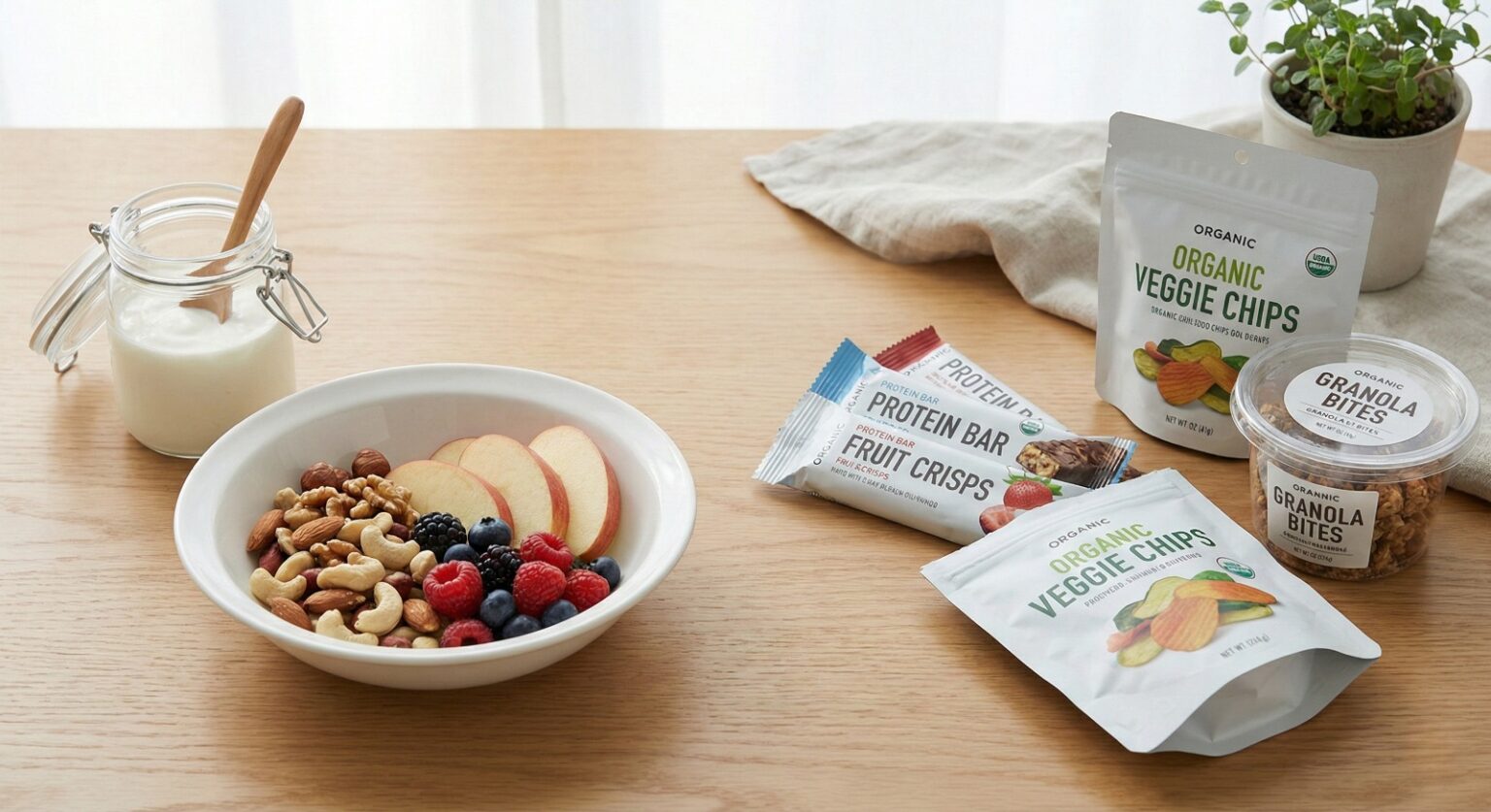
Take a walk down any snack aisle and you will see the same friendly words everywhere: healthy, high protein, low fat, no added sugar, natural. They make a packet of food sound like a decision you hardly need to think about. So is a “healthy” snack actually healthy? Sometimes yes, sometimes no — and the label gives you the tools to tell which one you are holding.
A claim on the front of a packet can be genuinely useful. It just never tells the whole story. The useful details live in the Nutrition Facts panel, the serving size and the ingredient list, and this guide shows you how to read them without turning snack time into homework.
What a "healthy" claim does and doesn't tell you
Here is something most people do not know: in the United States, those friendly front-of-pack words are not random decoration. Phrases like “healthy,” “high protein,” “low fat” and “sugar free” are regulated nutrient content claims — meaning they have legal rules behind them, and companies cannot use them however they want. The U.S. Food and Drug Administration (FDA) sets the conditions.
Take “healthy” itself. In December 2024 the FDA updated its updated “healthy” claim, and the new definition works like this. A product can only call itself healthy if it contains a real amount of food from a recommended group — fruit, vegetables, dairy, protein foods or grains — and stays under set limits for added sugars, saturated fat and sodium. Companies may switch to the new standards from April 28, 2025 whenever they are ready, and everyone using the word must follow them by February 25, 2028. The change also moved the goalposts: nuts, seeds, salmon, olive oil and plain water now qualify, while heavily sweetened yogurts and cereals no longer do.
So what does that leave you with? A product carrying “healthy” meets those specific requirements. That is real information. It is still not a verdict on everything else about the food, on your overall diet, or on whether this snack suits your day. And remember, these are American rules — other countries run their own labeling systems. Treat the word as a useful starting hint, not the end of the conversation.
The Nutrition Facts panel is where the real story is
The Nutrition Facts panel is the dependable part of the label. In one tidy block it tells you the serving size, how many servings are in the package, and the calories and nutrients per serving — saturated fat, sodium, protein, fibre, total sugars and added sugars.
Start with the serving size, because everything else hangs off it. The FDA sets serving sizes based on how much people typically eat, not on how much you should eat. A bag of chips can contain two or three servings. If you finish the whole bag, you may be eating two or three servings’ worth of the calories and nutrients listed on the label.
Then look at the numbers that matter for the kind of snack you want: added sugars, sodium and saturated fat, alongside protein or fibre if those are the reasons you are snacking.
The ingredient list adds one more layer. In the U.S., ingredients are listed from the largest amount to the smallest, so the first name on the list is the ingredient the product contains the most of. A long list or a name you cannot pronounce is not automatically a problem. Treat the list as context, not a verdict.
Added sugars: what counts as sugar anyway
The Added Sugars line quietly solves one of the most confusing questions in food: is honey “better” than sugar? The label does not care about the story you have heard — it counts by what is added during processing. Table sugar counts. Honey and syrups count. Sugars from concentrated fruit or vegetable juices count when they are used as sweeteners. The sugars naturally found in whole fruit, milk or vegetables do not count, because nobody added them.
That is why whole dates are not automatically “added sugar,” and why a product sweetened with fruit concentrate needs a closer look at how the concentrate was used. Guessing from one ingredient name is a trap. The Added Sugars number on the panel is the answer.
A useful habit: on the Nutrition Facts label, the Daily Value for added sugars is 50 grams on a 2,000-calorie diet, and the percentages tell you a lot — 5% DV or less per serving is low, 20% DV or more is high. And keep in mind that “no added sugar” says nothing about total sugar, calories, or what else is in the packet.
"High protein," "no added sugar" and "natural": decoding the claims
These words all mean one specific thing, and each leaves plenty unsaid.
“High protein” is a regulated claim, so the product must meet FDA conditions for using “high” with protein. Put simply, the claim tells you that the product meets those conditions — and nothing automatic about added sugars, sodium, saturated fat, calories or the rest of the snack’s quality.
“No added sugar” means exactly that and nothing more. The product can still carry plenty of naturally occurring sugar, refined flour and calories.
“Sugar free” is its own defined term, and a product can earn it without being nutritious.
“Natural” is the loosest word of the bunch. In the U.S., the FDA has no formal definition of “natural” — only a long-standing policy about artificial and synthetic ingredients — and that policy says nothing about whether a food is better for you.
None of this makes the claims lies. It makes them incomplete, and the rest of the label fills in the missing pieces.
What about protein bars and granola bars?
Bars sit right in the middle of the “healthy snack” boom, and the honest answer is: it depends on the bar in your hand. Some can be a genuinely handy choice when you need something portable, while others may contain more added sugar, sodium or calories than you expected. Do not judge the whole category. Compare the serving size and Nutrition Facts of the actual product, and look at the nutrients that matter to you in context.
Is packaged food automatically worse?
No. “Packaged” is not a nutrition word. Baby carrots come in a bag, canned beans come in a can, plain yogurt comes in a tub — and so do biscuits. What matters is what is inside and how it fits into your day. Packaging alone tells you nothing about nutritional quality. The label, not the packaging style, helps you tell those foods apart, which is why this guide keeps coming back to the panel.
A simple checklist for any packaged snack
You do not need a nutrition degree to shop well. For a packaged snack, ask yourself four questions:
- What is the serving size — and is that how much I will actually eat?
- What do the numbers look like? Check added sugars, sodium and saturated fat, plus protein or fibre if those matter to you.
- Does the front of the packet match what the panel shows?
- What is this snack for — a quick top-up, a treat, or part of a meal — and does it do that job?
There is no perfect snack, and no reason to grade every bite on a moral scale. Choose well most of the time and enjoy food without guilt the rest of the time.
The bottom line
Front-of-pack claims can sit on products with wildly different nutrition, which is why no single phrase should ever be read alone. Judge the snack with the full label, the serving size and your overall eating pattern — not one friendly word on the wrapper. “Healthy” is a starting point. The panel, the portion and the rest of your day finish the sentence.