LookAmaze

woman preparing fresh whole foods

Search for foods that “boost immunity” and you’ll find a thousand lists promising miracles. The honest version is quieter and more useful: no single food will turn your immune system up, but what you eat over time genuinely shapes how well it can work. This article looks at what the evidence actually says about the foods worth eating — and the immunity claims you can safely ignore.

What Food Can (and Can't) Do for Your Immune System

Your immune system defends you against viruses, bacteria and other invaders, and many things shape how well it does that — sleep, movement, stress, age and genetics included. Food matters, but it’s the balance of your whole diet, not any single food or nutrient, that supports your immune system best: a pattern built on vegetables, fruit, protein foods and whole grains, with not much highly processed food.

Food works quietly, as part of the bigger picture that also includes sleep, movement and everything else you do day to day. What it can’t do is “boost” your immune system to a higher setting; treat any promise like that as marketing.

The Nutrients Your Immune System Actually Needs

Immune cells need a steady supply of nutrients to grow and stay active. The ones researchers keep pointing to include vitamin C, vitamin D, zinc, selenium, iron and protein. None of them are exotic — though one, vitamin D, needs a little more explaining than the rest.

Vitamin C is the one people reach for when a cold goes around, so it deserves a clear answer. Many common foods provide vitamin C — citrus fruit, peppers, kiwifruit, broccoli and strawberries all count. The catch: extra vitamin C does not stop most people from catching colds, and for people who take it regularly it may only make a cold slightly shorter or milder.

Zinc is another nutrient your immune system relies on, and good sources include meat, shellfish, eggs, dairy, beans, nuts and whole grains. With all of these, the pattern is the same: getting enough matters more than getting extra.

Vitamin D deserves a special mention, because it doesn’t fit the “food first” story quite so neatly. Your immune system needs it, but very few foods naturally contain much of it. Fatty fish such as salmon and mackerel, plus fortified foods like vitamin-D milk or breakfast cereals, are the practical sources. Food is only one source of vitamin D, and some people can still have trouble getting enough.

Everyday Foods Worth Prioritising

Put practically, you don’t need an exotic shopping list. Try to build meals, most days, from a few dependable groups.

Vegetables and fruit in different colours — for vitamin C, think citrus fruit, peppers, kiwifruit, broccoli and strawberries.

Protein foods like fish, poultry, eggs, beans and lentils — meat, seafood, eggs and dairy all bring zinc with them.

Whole grains and legumes such as oats, brown rice, wholewheat bread and beans — an easy way to add fibre and variety.

And remember vitamin D’s quirk: because few foods naturally contain it, the practical sources are oily fish such as salmon or mackerel, and fortified foods like vitamin-D milk or breakfast cereals.

Fermented foods such as yoghurt, kefir or sauerkraut can join the mix too, if you enjoy them.

The point isn’t to hunt for one perfect “immune food,” or to eat every item above every day. It’s to build a varied way of eating you can repeat most days — that steady pattern is what actually does the work.

What About Garlic, Ginger and Turmeric?

These three always come up, and it’s easy to see why: they have flavoured kitchens and traditional remedies for centuries. The evidence for them as immune medicine, though, is thin.

Take turmeric, the yellow spice in curries and golden milk. The U.S. National Institutes of Health is blunt: researchers simply don’t yet know whether turmeric is beneficial for any health purpose. That doesn’t make it a proven treatment. Enjoy it as food, but don’t rely on it as an immune remedy.

Garlic gets the same honest treatment. It’s often sold as an immune booster during cold season, yet the NIH notes that very little research has been done on garlic and immunity; a 2022 review found only two small studies suggesting a possible benefit, and both had weaknesses.

Ginger has been studied mainly for nausea, and mostly in supplement form rather than as a food. So enjoy it in cooking and hot drinks — just don’t expect it to act like an immune medicine.

None of this means these three are bad to eat. Garlic, ginger and turmeric make food taste better, and that’s reason enough to keep cooking with them.

When Food Isn't Enough

A varied diet can cover many nutrient needs, but not everyone’s needs are the same. As vitamin D shows, age, limited diets, absorption problems and certain life stages can change what a person needs.

If you’re worried about a deficiency, or you’re thinking about supplements for a specific reason, talk to a doctor or registered dietitian instead of guessing.

If a healthcare professional confirms that you’re not getting enough of a specific nutrient, a supplement can help bring your intake up to recommended levels. What never helps is the idea that more is better: very large doses of some nutrients can be harmful, and no pill makes up for a poor diet.

For the wider picture — how sleep, stress, movement and supplements really affect your immune system — read our separate guide to what actually helps your immune system.

The Bottom Line

There are no miracle foods for immunity. What matters is less dramatic: eat a varied diet consistently, include foods that supply the nutrients your body needs, and don’t expect one ingredient to do the work of your whole diet. That’s a much more useful way to think about “immune foods” than chasing the latest superfood claim.


A woman sitting up in bed wrapped in a knitted blanket, holding a mug beside a tissue box in soft morning light

Feeling like you catch every cold that goes around is frustrating — and it can make you wonder whether your immune system is weak. The honest answer is usually reassuring: catching colds regularly is normal for most adults, and it does not, on its own, mean something is wrong with your immune system.

This article explains what “getting sick often” actually means, the everyday reasons people get more infections, and the patterns that are worth discussing with a doctor.

What "Getting Sick Often" Actually Means

In the United States, adults average two to three colds a year, and children often have more, according to the CDC. So a few colds a year — even several in one season — falls within ordinary experience for most people.

“Getting sick often” also depends on who you are. People who live with young children, work in schools or healthcare, or are around many people daily tend to catch more respiratory viruses. That is exposure, not weak immunity.

What matters is less the occasional cold and more the pattern — how often infections come, how severe they are, how long they last, and how easily they clear.

Why People Get Sick More in Some Seasons

Several ordinary factors make infections more likely — none of them meaning “weak immunity”:

  • Exposure –More time indoors with more people in colder months means more viruses circulating.
  • Sleep – Not getting enough sleep can negatively affect the immune system, per the CDC.
  • Stress – Long-term stress can affect how the immune system and the body’s stress response communicate, which has been linked to health effects over time, per the American Psychological Association (APA).
  • Everyday habits – Irregular meals, poor sleep routines and being run down make it harder for the body to stay well.

When Frequent Infections Warrant a Doctor's Visit

Infections that are unusually frequent, last longer than expected, are harder to treat, or keep coming back are a pattern worth discussing with a doctor, according to Mayo Clinic. Repeated serious infections — such as pneumonia — are especially worth raising.

Frequent infections can have many explanations, and they do not automatically mean you have a weak immune system. Only a healthcare professional can assess that, with proper tests.

Notice what this section is not saying: everyday tiredness, bloating, acne, stress or the occasional cold are not signs of a weak immune system. Those experiences are common, and on their own they tell you nothing about your immunity.

What Testing Involves

There is no home test that tells you whether your immune system is “weak.” If you’re worried about how often you get sick, the useful step is a conversation with a doctor, who can look at your history and decide whether any tests are appropriate.

Skip self-diagnosis from symptoms — it leads to worry and often to the wrong conclusion.

Supporting Your Immune System

You can’t “boost” your immune system like a dial, but healthy habits genuinely support normal immune function — sleep, nutritious food, regular movement, managing stress, and staying up to date with recommended vaccines. For the evidence-based guide to what actually supports your immune system, read our article on what actually supports your immune system.

The Bottom Line

Catching bugs regularly is usually normal — adults average two to three colds a year, and exposure, sleep and stress explain many sick spells. Occasional colds don’t mean your immune system is weak.

What deserves attention is a pattern: infections that are unusually frequent, severe, long-lasting or hard to treat. If that sounds like you, talk to a doctor rather than guessing. That’s not fear — it’s common sense.


A woman wearing a light-blue face mask and grey coat walking on a city footpath on a hazy overcast day.

Air pollution is a daily reality for most of the world’s population. According to the World Health Organization, 99% of people live in places that do not meet its air quality guidelines, and the combined effects of outdoor and household air pollution are linked to millions of premature deaths each year. You cannot control every source of pollution around you, but you can meaningfully reduce how much of it you breathe and live with. This article separates what actually helps reduce exposure from what doesn’t — and it is general information, not medical advice.

What Air Pollution Does to the Body

Fine particles known as PM2.5 — small enough to reach deep into the lungs, and some can enter the bloodstream — are among the most studied pollutants. The U.S. Environmental Protection Agency (EPA) states that exposure to particle pollution is linked to premature death in people with heart or lung disease, nonfatal heart attacks, irregular heartbeat, aggravated asthma, decreased lung function, and increased respiratory symptoms such as coughing or difficulty breathing. The World Health Organization reports that most air-pollution-related premature deaths are due to heart disease and stroke, with chronic lung disease, lower respiratory infections, and lung cancer making up most of the rest. These are associations seen across large populations — they describe risk for groups, not certainty for any one person.

Who Is Most at Risk

Children, older adults, and people with heart or lung conditions — including asthma and COPD — are more sensitive to particle pollution, and the World Health Organization notes that women and children bear the greatest burden from household air pollution. Pregnant women are also considered more vulnerable — air pollution has been linked to low birth weight. If you or someone you care for falls into one of these groups, the exposure-reduction steps below matter most. Air pollution also falls disproportionately on people in lower-income communities, per the U.S. Environmental Protection Agency, which is one reason clean air is a public-health goal, not just a personal one.

Reduce Your Exposure Outdoors

Use your local official air-quality index or service to check today’s air quality — and where that information is available, note which pollutant is driving the reading, because the right steps differ by pollutant. During high particle events (elevated PM2.5, smoke, or heavy haze): spend less time outdoors, and avoid or reduce strenuous outdoor activity, per EPA guidance. Particle levels change through the day, so if you must go out, choose cleaner times and less polluted routes, and keep outings short. During heavy outdoor particle events — such as wildfire smoke or heavy haze — keep windows closed at home and in the car, and in the car run the air conditioning in recirculate mode to reduce intake of outside air. When poor air quality is driven by other pollutants (for example, ozone), follow your local official guidance, because the right steps can differ. People with asthma or heart or lung conditions should follow their action or treatment plan — including using reliever medication as prescribed — and talk to their doctor if symptoms change, as advised by UK public health guidance.

Reduce Your Exposure Indoors

People spend most of their time indoors, so indoor air matters a lot. Start with sources: don’t smoke indoors, avoid burning wood indoors, ventilate cooking with an exhaust fan (or a window when outdoor air is clean), and avoid unnecessary chemical sprays and heavily scented products, per EPA’s Guide to Air Cleaners in the Home. Ventilate with clean outdoor air when outdoor quality is good — and keep windows closed when it isn’t. A portable air cleaner with a HEPA filter can reduce fine particles in one room when it is correctly sized for that room: compare the Clean Air Delivery Rate (CADR) with the room size, and replace filters regularly. Air cleaners reduce particles; they do not remove every pollutant, and no device removes everything. For central heating and cooling, use a filter rated MERV 13 — or the highest your system can handle — and change it regularly. Avoid air cleaners that intentionally produce ozone — the EPA advises against using them in occupied spaces because ozone is a lung irritant.

Masks and Respirators: What They Can and Can't Do

During heavy particle events — wildfire smoke, heavy haze, or very high PM2.5 — a properly fitted NIOSH-approved N95 (or P100) respirator can reduce the particles you breathe in; NIOSH-approved N95 respirators filter more than 95% of PM2.5-sized smoke particles, per EPA guidance. Fit matters: if air leaks around the edges, protection drops sharply — and paint masks, dust masks, and surgical masks do not prevent smoke inhalation, per EPA guidance. Respirators are more protective than masks: they filter particles — but standard particulate respirators do not filter harmful gases or vapors, and a proper fit is what makes them work, per CDC guidance. They do not remove all pollution. Reducing exposure — and getting to cleaner air — comes before relying on a respirator. Respirators are an event-based tool, not everyday wear. Wearing one can be more effortful for people with heart or lung conditions and, especially late in pregnancy, can make breathing harder — if that applies to you, talk to your healthcare provider about whether and how to use one. During serious smoke or particle events, public-health guidance advises pregnant people to reduce their exposure; if they must go outdoors, a properly fitted NIOSH-approved N95 can be used, per CDC guidance on wildfire smoke and pregnancy. If you feel dizzy or breathless while wearing a respirator, remove it and move to cleaner air.

Healthy Habits Help — But They Don't Remove Pollutants

Balanced nutrition, hydration, and sleep support general health, but they have not been shown to remove pollutants from the body or to substitute for reducing your exposure. Some research has explored whether antioxidant nutrients — such as vitamins C and E and carotenoids — modify the effects of pollution exposure; per a 2018 research review, the evidence is limited and emerging, and it does not support eating or supplementing your way out of pollution exposure. And there is no good evidence that drinking warm water speeds the removal of pollutants from the body: hydration supports general health, but it is not a pollution detox treatment.

What Doesn't Work: Common Myths

Detox teas and “toxin-flush” routines. There is no good evidence that any of these removes pollutants from the body. Steam inhalation. Authoritative air-pollution guidance does not establish steam as a pollution treatment — reviews that studied steam did so for colds and respiratory infections, not air pollution — and hot steam can cause scald injuries, according to a joint NHS and British Burn Association public safety warning. Houseplants. Plants are lovely for well-being, but research — including the American Lung Association’s guidance — shows they do not meaningfully clean the air in real homes, so they are not a substitute for source control, ventilation, or filtration. “Pollution protection” supplements. No supplement has been established as a reliable way to protect against air-pollution exposure or as a substitute for exposure reduction.

Step C — add the 2 links:

When to See a Healthcare Professional

Seek urgent medical attention — via your local emergency services — if you or a family member experiences sudden or severe difficulty breathing, or significant chest pain or pressure, as outlined by Cleveland Clinic for smoke exposure. Contact a healthcare professional for symptoms that are new, persistent, or worsening but not severe — for example, a lasting cough, wheezing, or shortness of breath — especially if you have heart or lung disease, are older, or are caring for a child, per the American Lung Association. If you have asthma or a heart or lung condition, follow your treatment plan and get help early if symptoms get worse. This article is general information — only a healthcare professional can diagnose or treat you. For help, contact your local health services.

Cleaner Air Is a Shared Goal

Most sources of outdoor air pollution — transport, industry, energy, and waste — are beyond any individual’s control. The World Health Organization notes that cleaner-air policies save lives at scale and that clean household energy greatly reduces exposure where it is still needed. Supporting clean air in your community is part of protecting everyone’s health.

The Bottom Line

You can’t eliminate pollution exposure on your own — but you can meaningfully reduce it. Reduce exposure indoors and out. Use a properly fitted particulate respirator during heavy particle events. Keep healthy habits because they support your health, not because they “detox” you. Skip the unproven remedies. And get medical help when symptoms warrant it. Every step you take to reduce exposure is real protection — no miracle needed.

woman resting with warm drink for home remedy

A scratchy throat, a queasy stomach, a sore muscle. Most people try something simple at home first, and often that’s perfectly sensible. But somewhere along the way, “try something gentle first” turned into “medicine is bad” — and that’s a dangerous turn.

The truth is simpler: self-care and medicine are not enemies. Some home remedies genuinely help minor symptoms. And some symptoms need medicine or a doctor — no amount of tea or rest changes that. This article covers which simple measures have real evidence, which are just tradition, and how to know when home care stops being sensible.

What Home Remedies Can — and Can't — Do

Before we get to specific remedies, one distinction matters: soothing a symptom is not the same as treating its cause, and neither is the same as preventing something worse.

A salt-water gargle can make a sore throat feel better. It doesn’t kill the virus behind it. Heat can ease a stiff muscle. It doesn’t heal the injury. Drinking water helps when dehydration is the problem. It doesn’t cure every headache.

That’s not a reason to skip remedies — they’re genuinely useful for comfort. It’s a reason to keep expectations honest.

One more thing: “minor symptoms” here means mild, short-lived, not getting worse, and without worrying warning signs. If a symptom is severe, keeps getting worse, or lasts longer than you’d expect, that’s no longer a home-remedy situation. What’s reasonable also depends on who you are — age, pregnancy, chronic conditions and current medicines can all change the picture. When in doubt, ask.

Sore Throat and Cold Discomfort

The most solid home remedy in this article is also one of the simplest. The NHS recommends gargling warm salty water for a sore throat: dissolve half a teaspoon of salt in a glass of warm water, gargle, and spit it out. Children should not try this, and the water should never be swallowed.

Warm salt water can soothe a sore throat. That’s the honest claim — it doesn’t “flush bacteria,” and it won’t stop you needing medicine later if that’s what your throat needs.

Other useful basics for cold discomfort: rest, fluids, and soft foods or cool drinks when swallowing hurts. Most sore throats are caused by viruses and improve within about a week. A pharmacist can advise on treatments for pain and discomfort; antibiotics are only used when a bacterial infection is suspected. If a sore throat hasn’t improved after about a week, keeps coming back, or the person is a young child, it’s worth a pharmacist’s or doctor’s advice.

Mild Nausea and Digestive Discomfort

Ginger is the remedy with the most genuine evidence here — but the evidence is narrower than the marketing. Ginger has been studied for particular types of nausea, such as nausea in pregnancy, according to the National Center for Complementary and Integrative Health (NCCIH). Studies of ginger for motion sickness have mostly not shown benefit, and results for nausea after surgery or chemotherapy are uncertain.

Two honest notes. First, most studies used ginger supplements or concentrated products — a cup of ginger tea is a pleasant drink, but it doesn’t automatically deliver the same effect. Second, ginger has evidence for some types of nausea, but that does not make it a general treatment for gas, indigestion or every upset stomach. If you’re pregnant and considering a ginger supplement, talk to a healthcare professional first. Ginger can also cause heartburn or an upset stomach in some people. If you take medicines, check with a healthcare professional before using ginger supplements, because herbal products can interact with medicines, per NCCIH.

As for the old advice about warm water “activating” digestion: we did not identify good evidence that warm water uniquely activates digestion, stimulates enzymes or treats gas and bloating compared with ordinary hydration. Drink water at whatever comfortable temperature helps you stay hydrated. There’s also no good evidence that cold water harms digestion.

Muscle Aches and Stiffness

Heat can help stiff or tight muscles. For a fresh injury with swelling, cold may be more appropriate early on, because it can reduce pain and swelling, per Cleveland Clinic. Neither is right for every type of pain — the right choice depends on the situation.

If you use heat: protect your skin, avoid excessive temperature or long exposure, and be especially careful if sensation in the area is reduced or numb — you may not feel excessive temperature normally and could burn yourself, per Cleveland Clinic. Heat can ease discomfort; it doesn’t “heal” an injury on its own.

Hydration and Rest

If dehydration is contributing to how you feel, replacing fluids matters. The NHS lists thirst, headache or light-headedness, dizziness, tiredness, dark urine and passing less urine among dehydration signs. But water does not treat every headache, dizzy spell or episode of fatigue — it treats dehydration.

Babies, children and older adults are more at risk of dehydration, and they need attention sooner.

Rest is similarly simple and similarly honest: it supports recovery, but it doesn’t replace treatment that’s genuinely needed.

"Natural" Does Not Always Mean Safe

It’s tempting to assume that anything “natural” is automatically safe. The U.S. Food and Drug Administration (FDA) is explicit that this assumption is wrong: the term “natural” does not ensure that a product is safe, per FDA 101: Dietary Supplements.

Two regulatory facts worth knowing, simply put. Dietary supplements can have strong effects in the body and can interact with medicines. And unlike medicines, dietary supplements generally do not go through FDA approval for safety and effectiveness before they are sold — they’re regulated, but on a different path than drugs.

That’s why the rule here is simple: a supplement is not a substitute for medicine your doctor prescribed. If you use supplements regularly and take medicines, check with a pharmacist or doctor.

When Self-Care Is Not Enough

Home remedies have their place — and their limit. Seek medical advice when symptoms are severe, keep getting worse, keep coming back, or aren’t improving as you’d expect.

Some signs need urgent or emergency care, not self-care:

  • For a sore throat: Emergency — difficulty breathing or being unable to swallow, per the NHS.
  • For dehydration: Urgent medical advice — persistent dizziness when standing, unusual drowsiness, or much less/dark urine. Emergency care — difficulty breathing, confusion, or being difficult to wake, per the NHS.
    Contact your local emergency service for emergency signs. Seek urgent medical advice for the urgent signs. The exact services depend on where you live.

One reassurance: most minor symptoms are genuinely minor. The point of these limits isn’t to scare you — it’s to make sure simple remedies are used sensibly, and that anything more serious gets proper care.

The Bottom Line

Simple measures can make some minor symptoms more comfortable: warm salt water for a sore throat, ginger for some types of nausea, heat for stiff muscles, fluids when dehydrated and rest when you need it. Used appropriately, they can be useful — with realistic expectations.

They soothe. They don’t cure everything, and they don’t replace medical care when it’s needed. “Natural” doesn’t automatically mean safe, and medicine isn’t the enemy.

When symptoms are severe, worsening, recurrent or not improving as expected, get proper care. That’s not anti-remedy. It’s common sense.

A ceramic mug and a glass of water on a wooden side table beside a folded knitted blanket in warm lamplight.

Gas, bloating and occasional heartburn are common. Many mild episodes can be managed with simple self-care, but persistent, severe or unusual symptoms deserve medical attention. People often use the word “acidity” for the burning feeling in the chest that doctors call heartburn or acid reflux. This article covers gas, bloating and heartburn-type discomfort: what may help at home, which popular remedies have little evidence behind them, and when a symptom should send you to a doctor. It does not diagnose your symptoms — digestive symptoms on their own rarely point to one clear cause.

What is gas and bloating?

Gas in the digestive tract is normal. It forms when you swallow air and when bacteria in the large intestine break down food that was not fully digested. Studies suggest that people pass gas an average of 8 to 14 times a day, and experts consider up to about 25 times a day normal. Bloating is the feeling of fullness or swelling in the belly that often comes with gas, although not everyone who feels bloated has a visibly larger abdomen.

You can produce more gas than usual when you swallow extra air — for example, when you eat or drink too fast, drink fizzy drinks, chew gum, or talk while eating. Certain foods and drinks cause more gas in some people than in others, and this varies a lot from person to person. Passing more gas after beans, lentils, broccoli or similar foods is not a sign that your digestion is “slow” or “weak” — it simply means those foods contain carbohydrates that your small intestine does not fully digest.

What may help with gas and bloating

The habits below are the ones with the most sensible evidence base, and none of them promise instant results:

What is heartburn and acid reflux?

Heartburn is a burning feeling in the middle of the chest, often rising toward the throat. It happens when stomach acid travels back up into the food pipe — a process called acid reflux. Many people get heartburn now and then, especially after eating, when lying down, or when bending over. When reflux happens often and causes problems, doctors may call it gastro-oesophageal reflux disease, or GERD — but an occasional burning feeling is not the same as GERD.

Not every burning feeling in the chest is heartburn, and chest pain must never be assumed to be reflux. That point matters enough to repeat in the doctor section below. For the wider question of which minor symptoms can sensibly be treated at home, see our guide to home remedies for minor symptoms.

What may help heartburn-type discomfort

Home habits are support,not a substitute for care. If self-care does not help, that is information — it means your symptoms deserve a proper medical check, not more home experiments.

Popular home remedies: what the evidence says

People share many home “cures” for gas, bloating and acidity. Some have little evidence, and a few can make things worse. Here is an honest summary of what is known:

If you try any home remedy and your symptoms get worse, stop it. And please do not let a popular remedy delay a proper medical check when your symptoms are frequent or severe.

When to see a doctor

Many mild, occasional episodes can be managed with self-care, but persistent, worsening or unusual symptoms deserve medical attention. Some symptoms need a medical opinion, and a few need urgent care.

Contact a doctor or clinician if:

Seek urgent medical help if:

A small, one-off amount of bright red blood from the bottom is not usually a serious problem. Possible causes include piles or a small tear, but a clinician can check the cause if it continues, returns or worries you.

These lists are not a diagnosis. They exist so that a symptom which deserves medical attention does not get hidden behind home remedies.


The bottom line

Gas, bloating and heartburn are common. Many mild, occasional episodes can be managed with simple changes. Slow down when you eat, watch fizzy drinks and your own trigger foods, and keep evening meals lighter and earlier. Frequent, severe or changing symptoms should be medically assessed — that is not a failure of home care, it is the sensible next step. Frequent, severe or changing symptoms should be medically assessed — that is not a failure of home care, it is the sensible next step.

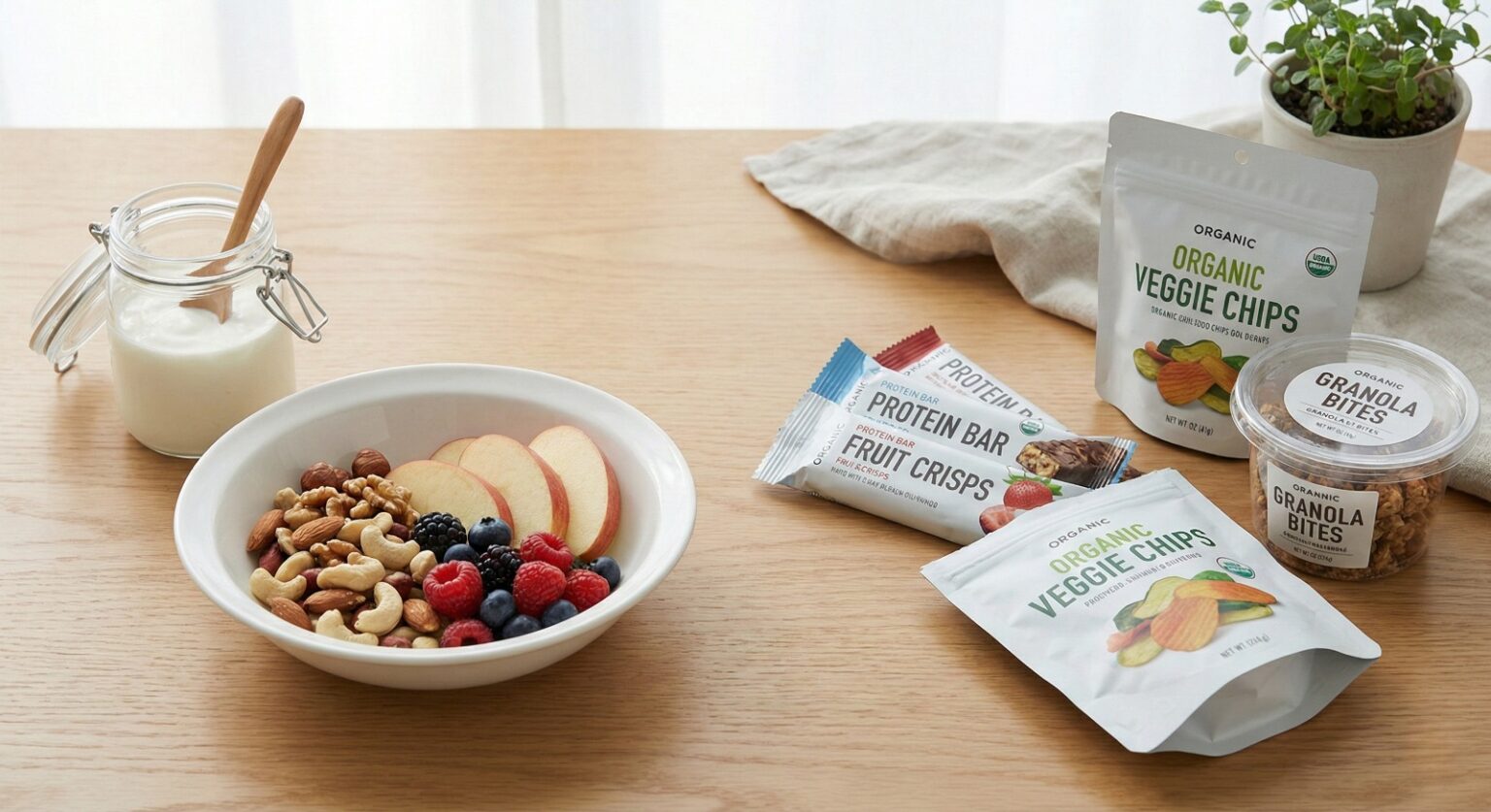
Yogurt, nuts and fruit arranged beside packaged protein bars and vegetable chips on a wooden table

Take a walk down any snack aisle and you will see the same friendly words everywhere: healthy, high protein, low fat, no added sugar, natural. They make a packet of food sound like a decision you hardly need to think about. So is a “healthy” snack actually healthy? Sometimes yes, sometimes no — and the label gives you the tools to tell which one you are holding.

A claim on the front of a packet can be genuinely useful. It just never tells the whole story. The useful details live in the Nutrition Facts panel, the serving size and the ingredient list, and this guide shows you how to read them without turning snack time into homework.

What a "healthy" claim does and doesn't tell you

Here is something most people do not know: in the United States, those friendly front-of-pack words are not random decoration. Phrases like “healthy,” “high protein,” “low fat” and “sugar free” are regulated nutrient content claims — meaning they have legal rules behind them, and companies cannot use them however they want. The U.S. Food and Drug Administration (FDA) sets the conditions.

Take “healthy” itself. In December 2024 the FDA updated its updated “healthy” claim, and the new definition works like this. A product can only call itself healthy if it contains a real amount of food from a recommended group — fruit, vegetables, dairy, protein foods or grains — and stays under set limits for added sugars, saturated fat and sodium. Companies may switch to the new standards from April 28, 2025 whenever they are ready, and everyone using the word must follow them by February 25, 2028. The change also moved the goalposts: nuts, seeds, salmon, olive oil and plain water now qualify, while heavily sweetened yogurts and cereals no longer do.

So what does that leave you with? A product carrying “healthy” meets those specific requirements. That is real information. It is still not a verdict on everything else about the food, on your overall diet, or on whether this snack suits your day. And remember, these are American rules — other countries run their own labeling systems. Treat the word as a useful starting hint, not the end of the conversation.

The Nutrition Facts panel is where the real story is

The Nutrition Facts panel is the dependable part of the label. In one tidy block it tells you the serving size, how many servings are in the package, and the calories and nutrients per serving — saturated fat, sodium, protein, fibre, total sugars and added sugars.

Start with the serving size, because everything else hangs off it. The FDA sets serving sizes based on how much people typically eat, not on how much you should eat. A bag of chips can contain two or three servings. If you finish the whole bag, you may be eating two or three servings’ worth of the calories and nutrients listed on the label.

Then look at the numbers that matter for the kind of snack you want: added sugars, sodium and saturated fat, alongside protein or fibre if those are the reasons you are snacking.

The ingredient list adds one more layer. In the U.S., ingredients are listed from the largest amount to the smallest, so the first name on the list is the ingredient the product contains the most of. A long list or a name you cannot pronounce is not automatically a problem. Treat the list as context, not a verdict.

Added sugars: what counts as sugar anyway

The Added Sugars line quietly solves one of the most confusing questions in food: is honey “better” than sugar? The label does not care about the story you have heard — it counts by what is added during processing. Table sugar counts. Honey and syrups count. Sugars from concentrated fruit or vegetable juices count when they are used as sweeteners. The sugars naturally found in whole fruit, milk or vegetables do not count, because nobody added them.

That is why whole dates are not automatically “added sugar,” and why a product sweetened with fruit concentrate needs a closer look at how the concentrate was used. Guessing from one ingredient name is a trap. The Added Sugars number on the panel is the answer.

A useful habit: on the Nutrition Facts label, the Daily Value for added sugars is 50 grams on a 2,000-calorie diet, and the percentages tell you a lot — 5% DV or less per serving is low, 20% DV or more is high. And keep in mind that “no added sugar” says nothing about total sugar, calories, or what else is in the packet.

"High protein," "no added sugar" and "natural": decoding the claims

These words all mean one specific thing, and each leaves plenty unsaid.

“High protein” is a regulated claim, so the product must meet FDA conditions for using “high” with protein. Put simply, the claim tells you that the product meets those conditions — and nothing automatic about added sugars, sodium, saturated fat, calories or the rest of the snack’s quality.

“No added sugar” means exactly that and nothing more. The product can still carry plenty of naturally occurring sugar, refined flour and calories.

“Sugar free” is its own defined term, and a product can earn it without being nutritious.

“Natural” is the loosest word of the bunch. In the U.S., the FDA has no formal definition of “natural” — only a long-standing policy about artificial and synthetic ingredients — and that policy says nothing about whether a food is better for you.

None of this makes the claims lies. It makes them incomplete, and the rest of the label fills in the missing pieces.

What about protein bars and granola bars?

Bars sit right in the middle of the “healthy snack” boom, and the honest answer is: it depends on the bar in your hand. Some can be a genuinely handy choice when you need something portable, while others may contain more added sugar, sodium or calories than you expected. Do not judge the whole category. Compare the serving size and Nutrition Facts of the actual product, and look at the nutrients that matter to you in context.

Is packaged food automatically worse?

No. “Packaged” is not a nutrition word. Baby carrots come in a bag, canned beans come in a can, plain yogurt comes in a tub — and so do biscuits. What matters is what is inside and how it fits into your day. Packaging alone tells you nothing about nutritional quality. The label, not the packaging style, helps you tell those foods apart, which is why this guide keeps coming back to the panel.

A simple checklist for any packaged snack

You do not need a nutrition degree to shop well. For a packaged snack, ask yourself four questions:

  • What is the serving size — and is that how much I will actually eat?
  • What do the numbers look like? Check added sugars, sodium and saturated fat, plus protein or fibre if those matter to you.
  • Does the front of the packet match what the panel shows?
  • What is this snack for — a quick top-up, a treat, or part of a meal — and does it do that job?

There is no perfect snack, and no reason to grade every bite on a moral scale. Choose well most of the time and enjoy food without guilt the rest of the time.

The bottom line

Front-of-pack claims can sit on products with wildly different nutrition, which is why no single phrase should ever be read alone. Judge the snack with the full label, the serving size and your overall eating pattern — not one friendly word on the wrapper. “Healthy” is a starting point. The panel, the portion and the rest of your day finish the sentence.

Woman sitting at a wooden table with a mug

Search “digestion slows down as you age” and you’ll find dramatic claims about everything starting to fail after 30. The medical reality is calmer and more encouraging: aging has less effect on digestion than it does on most other body systems. This article separates what actually changes from what people merely assume changes, and it explains constipation, which becomes more common in older adults, in plain language.

Nothing here is a diagnosis. If something worries you, a doctor is the right next step.

Does Digestion Really Slow Down With Age?

Not the way it’s often described. Doctors don’t describe a switch that flips at 30. What the evidence describes is a set of gradual changes that become most relevant later in life. Some are real, some are minor, and some famous claims — like “stomach acid drops after 30” or “your digestive enzymes run out” — are simply not supported.

What Actually Can Change as You Get Older

The esophagus: the muscular contractions that push food down, and the pressure in the valve at its top, can weaken with age. But this does not usually impair the movement of food.

The stomach: two changes are genuine. The stomach holds less comfortably because its wall becomes less elastic, and it may empty its contents into the small intestine a little more slowly. These changes typically do not cause noticeable symptoms on their own.

The small intestine: aging changes its structure only a little, and the absorption of most nutrients does not change much. One genuine exception is lactose: lactase, the enzyme that digests milk sugar, declines with age, which is why many older adults become less tolerant of dairy.

The pancreas: it does change with age — including some loss of overall weight and some scarring of tissue — but these changes do not reduce its ability to produce digestive enzymes.

What Changes Less Than People Think

Stomach acid is the clearest myth. Aging itself has little effect on the production of stomach acid and pepsin. What does increase with age is the chance of conditions that lower acid, such as atrophic gastritis — a different story from “aging makes your stomach weak.”

Why Constipation Becomes More Common in Older Adults

Here’s the surprise: the large intestine itself changes little with age. Constipation still becomes more common in older adults, but for a mix of reasons — not because “the colon just gets slow.” Constipation means having fewer than three bowel movements a week, often with stools that are hard, lumpy, or painful to pass.

Many factors come together: contents may move through the large intestine a little more slowly; the rectum’s push may weaken modestly; many of the medications older people take can cause constipation; physical activity often drops; and pelvic-floor weakness affects some older women.

None of this means constipation is simply “old age.” Diet, fluids, activity and medication reviews all matter — and they are things you can act on.

Habits That Can Support Digestive Health as You Age

If constipation is the concern, the basics help at any age: eating more high-fibre foods, drinking enough fluids, and staying physically active — and when you eat more fibre, add it gradually rather than all at once. And if medicines are part of the picture, a doctor or pharmacist can advise — never stop a prescribed medicine on your own.

For people bothered by reflux, a common piece of advice is to finish meals two to three hours before lying down.

When Digestive Changes Deserve Medical Advice

If constipation does not improve with self-care, NIDDK recommends discussing it with a doctor. Bleeding is never something to wait out: black or tarry stools, or blood in the stool, can be signs of digestive-tract bleeding — seek medical help right away.

You don’t need to diagnose yourself.

The Bottom Line

Aging is not a digestive cliff. Most of the system keeps working well, and the changes that do occur are usually mild. Constipation later in life often has several contributing factors. Fibre, fluids and physical activity can help, and if a medicine may be contributing, discuss it with a healthcare professional before changing or stopping it. If something worries you, a doctor — not an article — is the right person to decide what it means.

Grilled salmon with asparagus and lentils, a side salad and a glass of water on a wooden table

Let’s answer the question behind the title straight away. Can you eat healthier and still keep the foods you love? For most people, yes. A balanced eating pattern does not require every meal to be perfect. Eating well is about the overall shape of what you eat over days and weeks, and about practical choices that make that shape better. This guide keeps the foods you enjoy on the table and shows how to build the rest of your eating around them — without guilt and without extremes.

One meal doesn't define your diet

Strictly speaking, no single meal decides whether you eat well; the overall pattern does. Current U.S. federal guidance — the Dietary Guidelines for Americans 2025–2030, published in January 2026 — centres on prioritizing whole, nutrient-dense foods such as vegetables, fruit, whole grains, protein foods, dairy and healthy fats, within broader healthy eating patterns.

The Dietary Guidelines are not a licence to treat every food as equal, and they do not claim that “anything goes.” The practical flexibility point comes from the UK’s NHS Eatwell Guide instead: you do not need to achieve the right balance at every meal, because the aim is to get the balance right over a day or even a week. So a rich dinner or a favourite snack is not, by itself, the measure of your diet. What counts is what the balance looks like across the day and the week.

A balanced diet isn't a perfect scorecard

You do not need to score every meal against a perfect plate. The NHS Eatwell approach looks at balance across a day or even a week, not at whether every individual meal is ideal. A celebration meal, takeaway or favourite snack can simply sit inside that wider pattern. Food does not need to be divided into perfect eating versus cheating; it can simply be food, eaten in sensible amounts, most of the time. A meal that is mostly about enjoyment — a celebration, a takeaway, a favourite snack — is not a failure that needs to be “made up for.” It is just part of the pattern.

Keep your favourites — change what surrounds them

You do not have to say goodbye to your favourite foods to eat well. What you can do is change the context around them. The UK’s NHS Eatwell Guide puts it in plain words: foods and drinks high in fat, salt and sugar should be eaten less often and in smaller amounts — not never.

Practical versions of that idea: if a rich dessert is the part of the meal you love, enjoy it in a smaller portion instead of pretending you will skip it forever. If chocolate is something you enjoy, you do not have to replace it with a food you dislike simply because it sounds healthier. The practical question is how often you have it, how much you have, and what the rest of your eating pattern looks like. Add more vegetables, fruit, whole grains and other nutrient-dense foods around the foods you enjoy, so the plate and the week lean in the right direction. A wholegrain version can be a useful swap when it is something you genuinely enjoy eating.

One honest note: adding a salad next to a pizza does not “cancel out” the pizza. That is not how this works — no single food is neutralised by another. The point is the overall pattern across the day and the week, not arithmetic on individual foods.

Try adding before you start banning foods

One simple approach is to look first at what you can add to the diet, rather than making a long list of foods to remove. If a pasta dish is your comfort food, add a handful of vegetables or a side salad to the plate. If you like bread, try the wholegrain version when it genuinely tastes good to you. Put fruit next to your usual breakfast. Choose water more often alongside meals when that feels natural. Swap one thing at a time — not a kitchen-wide overhaul on a Monday morning.

This is a practical nutrition strategy, not a judgement about individual foods. The goal is to let the nutrient-dense foods take up more room in your pattern, one easy change at a time.

Portions and frequency matter — but not more than the pattern

Both what you eat and how much of it you eat matter. For foods high in fat, salt or sugar, smaller amounts and less frequent intake can be practical ways to fit them into the broader diet. If a treat shows up every day in a large portion, easing the size or the frequency will help the overall pattern. If your favourite foods are already occasional and reasonable, you may not need to change anything about them at all.

There is no single portion rule that fits every food or every person. Pay attention to the amount you actually eat, and use the broader eating pattern as the context.

Do you need a "cheat meal"?

No. You do not need the label “cheat meal” to describe a food you enjoy. The practical question is how that food fits into the overall eating pattern — not whether it belongs in a “good” or “bad” column. If food ever feels like a constant struggle rather than everyday eating, it is worth mentioning to a health professional; that is a conversation for you and them, not something an article can answer.

A realistic way to build your week

None of this needs to become a complicated plan. A sensible week can look like this:

  • Build most meals around foods that contribute useful nutrients — vegetables, fruit, whole grains, proteins, and dairy or alternatives.
  • Keep room for foods you genuinely enjoy, without arbitrary percentage rules or “cheat” labels.
  • For foods high in fat, salt or sugar, ease the amount or how often they show up.
  • Make one or two realistic additions or swaps you actually like, rather than overhauling everything.
  • Think about the balance across a day or even a week, rather than judging one isolated meal.

That is the whole method: simple, flexible and practical.

The bottom line

Eating well is a long-run pattern, not a single perfect day. Keep the foods you love in reasonable amounts, let nutrient-dense foods take up more room, and judge your balance over a day or a week rather than by one plate. If packaged snacks are among your favourites, our guide to reading snack labels can help you choose versions you enjoy with your eyes open. The goal is not a perfect diet — it is a better pattern you can actually live with.

A glass of cold water with ice beside a steaming mug of hot water

You have probably heard it both ways: warm water soothes the stomach, cold water shocks it. Some traditions swear by warm water first thing in the morning. Other people are sure that iced water after a meal is a mistake. The honest answer is simpler than either claim. For most healthy people, there is no established need to choose a specific water temperature for better digestion. If you like warm water, drink it. If you prefer cold, that is fine too. What matters far more is that you drink enough water — and that you do not let a glass of water stand in for a medical check-up when something actually feels wrong.

Where the "warm water for digestion" idea comes from

Warm-water advice is old. It comes from traditional health systems and everyday folk wisdom in many parts of the world, where a warm drink is associated with comfort, care and settling the stomach. There is nothing wrong with enjoying that tradition. But a long history does not make a claim medical evidence, and most of the specific explanations attached to warm water — that it “activates” digestion or “wakes up” the gut — do not come from research. They are ideas that sound reasonable, which is exactly why they spread.

What small studies actually show

The scientific picture is thinner and more mixed than either side of the argument suggests. Consider three examples.

A 2019 study of 11 healthy young men found that water at 2°C — nearly freezing — lowered the frequency of stomach contractions in the hour that followed, and the men went on to eat less at the next meal. That is a real, measurable laboratory observation. It is also a single, small, short-term study of one group, which is not the same as evidence that cold water is harmful to digestion in everyday life.

An older study of liquid meals found that a very cold drink emptied from the stomach more slowly at first than a drink at body temperature, while the difference for a warm drink was not statistically significant. The same study measured the stomach’s contents warming back toward body temperature within roughly half an hour. In other words: temporary, small, and quickly reversed.

A recent small study in older adults measured emptying after protein drinks at 4°C, 37°C and 60°C. The 37°C and 60°C drinks showed faster emptying in the first 5–10 minutes than the 4°C drink.

Put the three together and the results point in different directions depending on the study, the drink, the temperature and the people tested. That inconsistency is the real finding — not “warm wins” or “cold loses.” There is an important difference between a change measured in a laboratory and a benefit you can feel. A stomach that contracts a little more or a little less for a short while after an unusually hot or cold drink is not a stomach that has been helped or harmed. Short-term physiological effects do not automatically translate into better or worse digestion.

Common warm-water claims that go too far

A whole set of popular claims treats the gut like plumbing. Warm water is said to switch on digestive enzymes, improve blood flow to the stomach, break food down faster and flush waste away. None of these has good supporting evidence, and several rest on a misunderstanding of how digestion works.

The basic work of digestion depends on stomach acid, bile, digestive enzymes and movement through the gut. Drink temperature can temporarily affect stomach activity in small studies, but that is very different from the claim that cold water “solidifies” dietary fat: fats are digested with the help of bile and enzymes produced by the liver and pancreas. The older emptying study is a useful reminder here too — the stomach warms a cold drink back toward body temperature fairly quickly, so any temperature effect from a single drink is short-lived.

The “flush” idea deserves a special mention. Warm water is sometimes described as flushing toxins or waste from the system, but there is no good evidence that warm water acts as a detox or cleanse. If you enjoy warm water in the morning, enjoy it — just do not drink it expecting a cleanse.

Is cold water bad after meals?

For a healthy person, there is no established general medical rule that says you must avoid cold water after meals. Small studies show that temperature can temporarily affect stomach or esophageal activity, but that is not evidence that ordinary cold water after meals harms digestion in healthy people, causes bloating, or creates “weak digestion.” Some people do notice that very cold drinks feel uncomfortable, and that is a perfectly good reason to choose something warmer. Personal comfort is a legitimate guide. It is just not a medical rule, and there is no reason to feel guilty about drinking cold water with or after a meal if it agrees with you.

When temperature might matter

There is one genuine exception worth knowing about, and it belongs to a specific medical condition, not to healthy readers. Achalasia is a disorder of the esophagus in which food has trouble moving into the stomach. The evidence here comes from two small studies with different designs. In one study of people with untreated achalasia, very cold water raised pressure in the esophageal sphincter and lengthened contractions, and symptoms were worse; warmer water produced changes in the opposite direction. A separate small manometry study found that temperature-related responses differed among the groups — people with achalasia, people with other swallowing problems, and healthy participants — which shows that temperature can affect the esophagus in the laboratory even in people without disease. Both studies are small and their results are not identical. The important point is this: these findings do not show that cold water is harmful for healthy people, and they do not mean healthy people need to manage their water temperature. The symptom-based advice from the untreated-achalasia study belongs to people with that diagnosed condition and should not be generalized. Difficulty swallowing deserves a proper evaluation — not a temperature experiment.

What matters more than water temperature

For day-to-day digestion, the variables that actually matter are the ones that sound boring: eating regular meals, getting enough water overall, and paying attention to foods that disagree with you. Health organizations take a similar view — research comparing warm and cold water directly is limited, and for most people the choice comes down to comfort and habit. Our guide to the best foods for digestion covers the food side of that equation.

And if gas, bloating or heartburn-type discomfort is the real problem, it will not be solved by switching water temperatures. Our guide to gas, bloating and heartburn home care explains what is worth trying and when a symptom deserves a doctor. Persistent digestive symptoms deserve a closer look, not a colder or warmer glass of water — and if you have been told your digestion is “weak,” our article on what “weak digestion” really means is a good place to start.

The bottom line

Warm water is a pleasant habit. Cold water is a pleasant habit. Neither is a digestive treatment, and current evidence does not establish that ordinary warm or cold water harms digestion in healthy people. (Very hot, scalding drinks are a separate matter — this article is about ordinary drinking temperatures.) The research is limited, the results are mixed, and the practical takeaway is refreshingly unglamorous: stay hydrated, eat well, and let your own comfort choose the temperature. If symptoms are persistent or worrying, see a doctor — that advice does not change with the weather, or with the water.

A cooked meal

Type “best foods for digestion” into a search box and you’ll find long lists of miracle foods, food-combining rules and detox plans. The evidence-backed version is simpler: there is no single food that works for every digestive symptom. This guide focuses on practical basics supported by digestive-health guidance — fibre-rich foods, enough fluids and eating habits that may reduce gas symptoms — while keeping the evidence on fermented foods in perspective.

People can respond differently to the same foods. Nothing below is a diagnosis or a cure. It is practical guidance, plus signs that mean medical advice matters more than changing your diet.

What Food Can — and Can't — Do for Digestion

Food can affect gas and indigestion symptoms, but there is no universal “digestion diet.” NIDDK notes that some foods and drinks can increase gas symptoms for some people, while people with indigestion may also notice different food or drink triggers. That is why it makes more sense to focus on a few practical basics and your own tolerance than to follow a universal ban list.

Fibre-Rich Foods: A Practical Place to Start

Dietary fibre is the part of plant foods that the body can’t digest or absorb. Fibre is well known for helping prevent or relieve constipation. Good food sources include whole grains, legumes, fruits, vegetables and nuts — for example, oatmeal, lentils, apples with the skin on, carrots and almonds.

Depending on your age and sex, adults should get 22 to 34 grams of fiber a day. Whole foods can contribute to that target: whole grains, beans or lentils, fruits, vegetables and nuts all provide fibre.

Add fibre slowly. Some people get gas symptoms after foods that contain a lot of fibre, so the key is to add fibre to your diet a little at a time, allowing your body to get used to the change.

Fluids: Water Helps Fibre Do Its Job

Fibre works best with enough liquid. The practical guidance is plain: eat enough fibre and drink plenty of liquids to help the fibre work better. NIDDK lists water and other liquids such as naturally sweetened fruit and vegetable juices and clear soups as useful options. These liquids help keep stools softer and easier to pass, and staying hydrated can help you avoid getting constipated.

When you increase fibre, make sure you’re also drinking enough. Water and other liquids throughout the day can help fibre work better.

Fermented Foods: Worth Including, Not a Miracle

Some yogurts and other fermented foods contain live microorganisms used as probiotics, which is why they often appear on digestion-food lists.

The honest science is modest: a great deal of research has been done on probiotics, but much remains to be learned about whether they’re helpful and safe for various health conditions. Some studies report possible benefits for specific conditions — including some evidence for constipation in adults and for symptoms of irritable bowel syndrome — but strains and benefits vary, and there is no universal probiotic recommendation.

Treat fermented foods as optional rather than essential. If you enjoy yogurt, kefir or similar foods, include them as part of a balanced diet; if you don’t, there is no evidence you must. And if you are thinking about a probiotic supplement, talk with your doctor before using supplements, probiotics, or any complementary or alternative medicines — this article’s guidance is about food choices only.

Eating Patterns That Make a Difference

Eating habits can also affect gas symptoms. Practical steps with support include eating smaller, more frequent meals; eating more slowly and, when you can, sitting down to eat; and consuming less of the foods and drinks that increase your gas symptoms. Foods such as cruciferous vegetables, legumes and foods or drinks high in fibre can increase gas symptoms for some people.

For indigestion, the trigger picture is personal too: NIDDK notes that specific foods or drinks are not thought to cause indigestion, but certain foods or drinks may lead to symptoms for some people with indigestion. Noticing your own pattern — which foods, how much, how fast — is more useful than a universal ban list.

When to See a Doctor Instead of Changing Foods

Food choices can help with everyday digestive comfort, but they are not a substitute for medical care. See a doctor right away if you have indigestion together with pain in your chest, jaw, neck or arm; difficulty swallowing; frequent vomiting; severe and constant pain in your abdomen; or black, tarlike stools. You should also see a doctor if your indigestion doesn’t get better.

For gas, the same idea applies: talk with a doctor if gas symptoms bother you, change suddenly, or come with abdominal pain, constipation, diarrhea or weight loss.

This list is not a diagnosis — it is a signal to get a professional opinion.

The Bottom Line

There is no magic food for digestion. A practical starting point is fibre-rich foods, enough fluids and eating habits that reduce gas symptoms for you. Add fibre gradually, and treat fermented foods as optional rather than essential. If indigestion does not get better, or gas symptoms suddenly change or come with other symptoms, talk with a doctor.