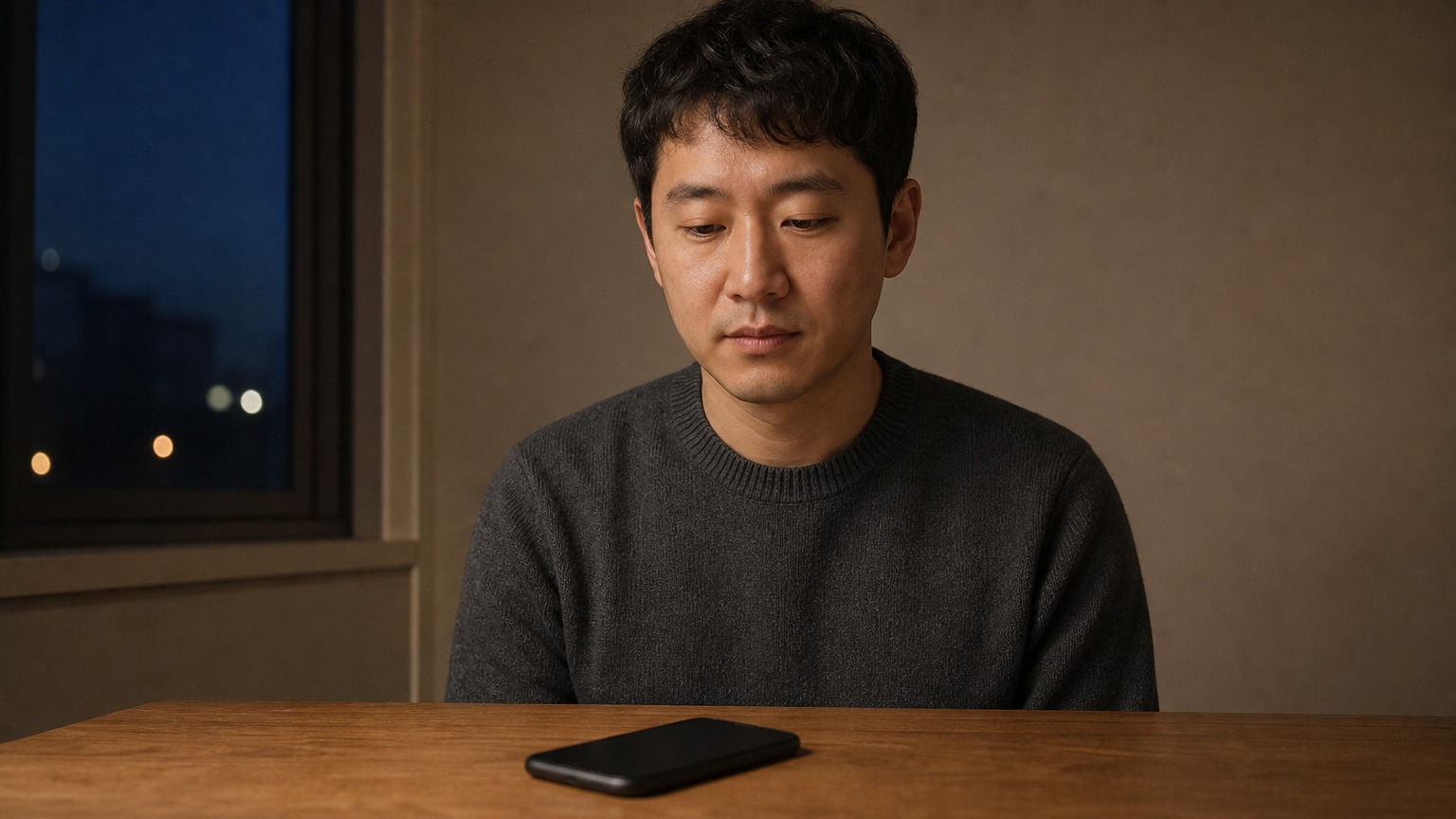
The evening routine: you open an app, and another stream of faces appears. You swipe for a while, match with two or three people, trade a few messages. One conversation is easy and warm — then, by the end of the week, it has quietly stopped. You check your phone more than you mean to. You wonder if you said something wrong, and then you wonder if you should even be wondering.
None of this makes you fragile or difficult. Dating today runs on more options, faster contact, and endings that need no explanation — and that changes what dating feels like for almost everyone doing it. This article is about that environment: why it can feel so confusing and exhausting even when you are approaching it normally.
Dating Changed Faster Than People Did
People have been dating for as long as there have been young adults. What has changed is not the wanting — it is the machinery around it.
A generation ago, meeting someone usually meant your existing world: work, college, friends of friends, a place you went to regularly. The pool was small and the pace was human. Today the pool is effectively endless, and the pace is set by an interface. You can meet more people in a month than your grandparents met in a decade.
None of that is bad by itself. More chances can be genuinely good. But the machinery changed faster than people did. Our instincts for reading another person — the slow getting-to-know-you, the small signals, the natural rhythm of two lives overlapping — were built for small pools and slow pace. Dropping those instincts into an endless stream of options is disorienting, and it is completely normal to feel that disorientation.
More Options Can Mean More Uncertainty
More options sounds like a pure gift: more chances to find someone right for you. But options come with a quiet cost — comparison.
Even a good conversation now sits next to the possibility of a better one. You can be genuinely enjoying a connection and still wonder whether you should keep looking. In one online-dating experiment, D’Angelo and Toma found exactly this pattern: participants who chose from a larger set of potential partners were less satisfied with the person they selected one week later, and more likely to change their selection, than those who chose from a smaller set. It was one experiment, and it did not measure long-term relationship success — but it matches what many people feel: that the size of the menu makes it harder to feel settled about the person you chose.
This is not a law that options destroy commitment. It is a tendency worth knowing about: abundance feeds doubt, and doubt is tiring.
Ambiguity Is Easier to Sustain
Here is a strange fact of modern dating: being unclear is easier than being clear.
Nobody has to define what a situationship is, or what six weeks of daily texting means, or whether you are “dating” or just “talking.” Leaving things undefined needs no conversation and no courage — so it becomes the default. Two people drift through a connection that has no name, no stated direction, and no moment where anyone had to decide anything.
The confusion this creates is not a personal failing. When the rules of a game are unspoken, every player spends energy guessing them. You re-read messages for hidden meaning. You measure your last three weeks against stories you have read online. You try to work out whether you are being too eager, or not eager enough, or whether this person thinks about you even half as much as you think about them. None of that guessing means you are doing dating wrong. It means you are dating in a system that leaves almost everything unspoken — and someone has to carry the uncertainty. Usually both of you do, silently.
When Contact Can End Without Closure
The most disorienting part may be how conversations end now: they do not end. They just stop.
You have weeks of warm messages. Then one message goes unanswered, and then another, and gradually you understand that it is over — not because anyone said so, but because the silence has become the answer. In a study of people who had recently experienced a breakup, Koessler and colleagues found that recipients reported greater distress and negative affect than the people who ended the relationship, and that ghosting breakups involved more avoidance, withdrawal and mediated ways of ending contact.
You do not need a study to recognise the feeling: an unexplained ending leaves questions with no answers. Did they lose interest? Did something happen? Was any of it real? The person who walked away may never think about it again. The person left behind often replays the whole thing, searching for a reason that was never given.
This is not a claim about why people disappear — their reasons are as varied as they are. It is about what an unexplained ending does to the person on the receiving end, and how ordinary it is to feel unsettled by it.
What You Can Control in a Fast-Moving Dating Culture
You cannot control how many options the apps show, how quickly people lose interest, or whether someone ends things without a word. But you are not powerless in the system — you get to decide how you move through it.
A few small choices make a real difference. You can limit how much volume you absorb: set a rough time boundary for swiping and keep it, instead of letting the stream fill every quiet moment. You can spend your attention where it is being returned — a conversation that actually goes somewhere deserves more of you than ten that go nowhere. You can let consistency matter more than novelty: someone who shows up, replies, and remembers what you said is rarer than a fresh profile, and worth more. And you can refuse to invest heavily before a connection has actually developed. In the early weeks you are not choosing a life partner; you are deciding whether to keep talking to a promising stranger.
None of this is a trick to make someone commit, and none of it is about playing games or building walls. It is about choosing a pace that leaves you emotionally present instead of depleted — so that when something real does show up, you have something left to give it.
The confusion and exhaustion of modern dating are not proof that you are doing it wrong, and they are not proof that something is wrong with you. They are a reasonable response to an environment built for abundance and speed, not for the slow, uncertain work of actually getting to know another person.
You cannot make the environment smaller. But you can decide how much of it you let in, where you place your attention, and what pace you are willing to keep. Dating today asks a lot of everyone. Meeting that with a little more intention — and a little more kindness toward yourself — is not surrender. It is the most sensible way to move through a world that changed faster than anyone could adapt to.