Most households own more of some things than they need and less of others, and the pattern rarely follows a rule. Someone with forty mugs may need every one; someone with four may not. The real question is not whether you should own less in general, but how many of a particular thing is enough for the way your household lives.
The answer comes from things you can observe: what you use, what genuinely duplicates something else, what would be inconvenient to replace, how much room the surplus takes, and what the item means to you. Each is taken in turn below, because honest answers differ by category — keeping more spare bedding and fewer spare cables is not inconsistent.
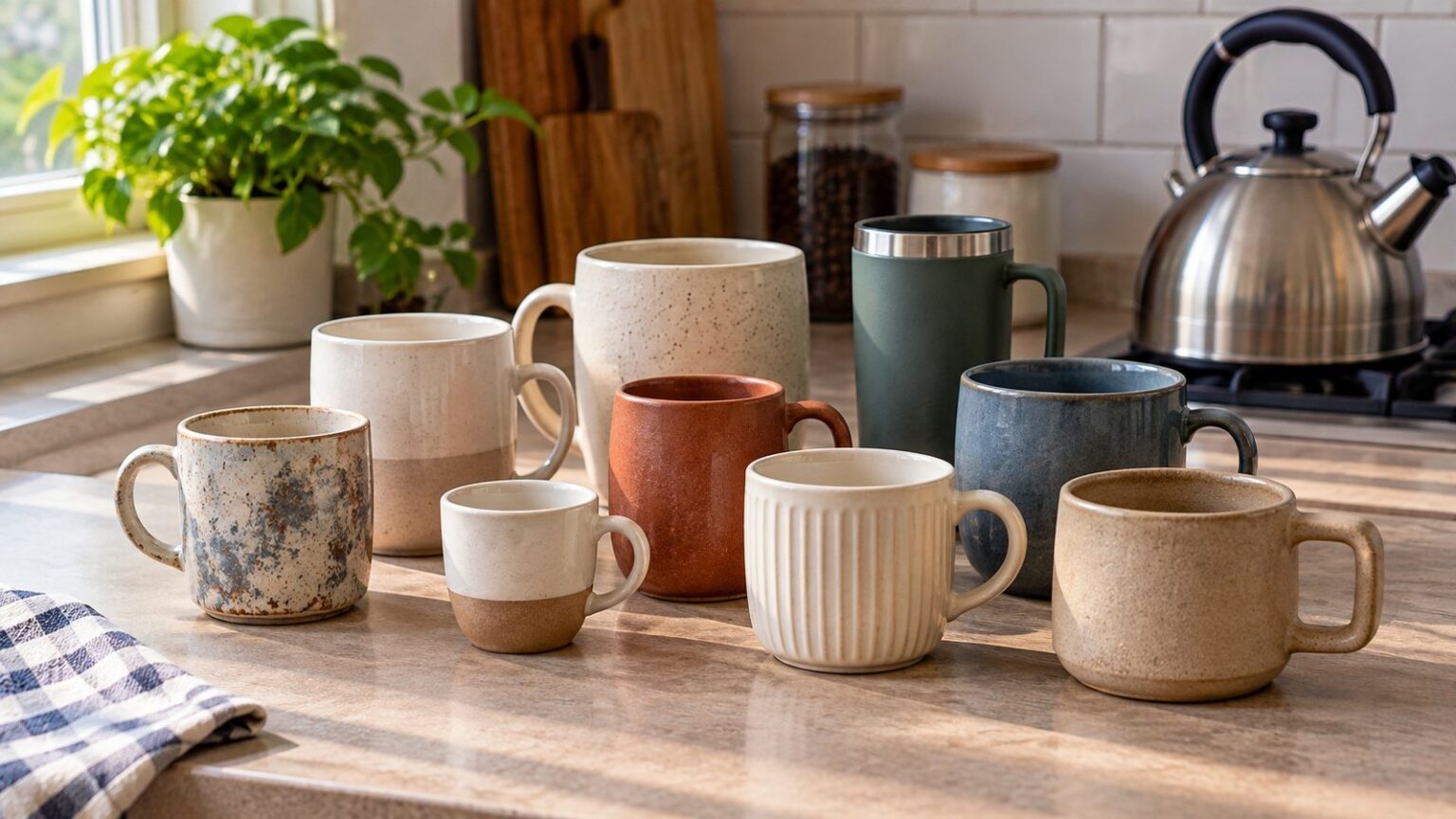
Start With One Kind of Thing, Not the Whole House
Deciding how much of everything you own is too large a question; asking “how much do we have?” leads to vague unease rather than a decision. Pick one category: charger cables, bath towels, drinking glasses, batteries, food containers, gardening tools, outgrown children’s clothes.
Then count what is actually there — the real number, including the things out of sight and the ones you have forgotten. Collect the whole category in one go and count every item. Most households are surprised, because things accumulate a few at a time and nobody ever adds them up. Write the number down; that figure is what the rest of this decision is about.
Look at What Is Actually in Use
Use is the most reliable evidence, but it has to be read across a real cycle rather than a single day. Towels and bedding pass through a wash-and-change cycle, so how many are genuinely in use depends on how often beds are changed and washing done — which differs by household. Watch for a few weeks and note the highest number in use at any one time; that is the working figure.
Then look at what sits outside it. Some is genuine slack, like the towel at the bottom of the pile that nobody reaches for because it is thin and scratchy. Some is occasional: the extra bedding for guests, the larger pan used a few times a year.
Use alone settles nothing. Charger cables show why: a cable that sits untouched for a long stretch may still be the only one that fits an older device. Frequency is evidence, not a verdict, and a rarely used item is not automatically a removable one.
Decide Whether It Is Really a Duplicate
Two similar items are not automatically one too many. The question is what each of them does.
Real duplicates perform the same job in the same way, so one is simply extra. A fourth set of everyday glasses, when three already cover every meal and every guest you have, is a duplicate. So is a fifth charger cable that lives in the same bag as another because nobody ever takes it out.
Items that look alike are often not duplicates. Two cables of the same length may take different connectors. Two pans of the same diameter may heat differently enough that you choose between them. Two pairs of scissors may be one for fabric and one for paper, and using the wrong one ruins both jobs.
So the test is not whether items look similar, but whether taking one away would leave something undone. If it would not, you have found a real duplicate.
When Keeping a Spare Makes Sense
A spare earns its place when replacing the original later would be genuinely inconvenient.
Three questions are worth asking. If this one failed or ran out, could you get another quickly, on the day you need it? Is the exact kind still available, or has the fitting, size or formula changed since you bought it? Would being without it for a day or two cause real disruption — a charger for a device you depend on, the only bulb that fits a fitting, a part for something you cannot easily take to a workshop?
Then set that against the room the surplus occupies. A small buffer of batteries, bulbs or printer ink takes up very little and prevents an irritating evening; that is a spare doing its job. A spare duvet for a bed you no longer own takes up a substantial amount of space for years, and the inconvenience it guards against is hypothetical. The reasonable test is the space a thing occupies weighed against how often the trouble it prevents would happen.
Backups are the clearest case in most homes. A modest buffer of things that run out at awkward moments is sensible; a decade of them is not, especially when whatever is at the bottom no longer matches anything you own.
Personal Value Is Part of the Decision
Some things stay because of what they are to you, and that is a legitimate reason, not a failure to be practical. A mug a parent used every morning, a tool a grandparent taught you with, a box of letters: none would survive a use test, and none needs to.
What separates a considered decision from an unlimited loophole is being deliberate. Name the items rather than letting the category grow. Decide how much room you are willing to hold for them, and treat that as a choice rather than something that needs defending.
The usual problem is not a household that keeps too much of this kind, but one that never settled where the limit is, so the justification stretches to cover things that were never meaningful. Three rough groups help: items you would miss badly if they disappeared, items that carry a mild association, and items kept mainly because discarding them felt careless. Only the first group is doing the work personal value is meant to do.
Decide How Many Make Sense for Your Household
Now bring the criteria together for the category you started with. What is in use across a normal cycle? Which items are true duplicates? Which spares earn their place because replacing them would be inconvenient and the room they take is proportionate? Which stay for personal reasons?
Then say the number and the reason. Six bath towels: four in rotation, two for guests. Three charger cables: one for each device the household actually owns. Two boxes of family papers, kept deliberately.
Putting it into a sentence matters, because a number with a reason can be revisited: a spare room becomes a bedroom, a device is replaced, a child leaves for university.
Different households will reach different answers, and the same household will reach different answers in different categories. That is why this works one category at a time rather than applying a single rule to a whole home: you end up with a number you can defend, not one that is universally right.
Once you know how many you need, the next question is where the things you keep belong. The aim is not the smallest possible number, or even a smaller one than you have now. It is knowing, for each category, how many you need, why that number suits your household, and what would change the answer.