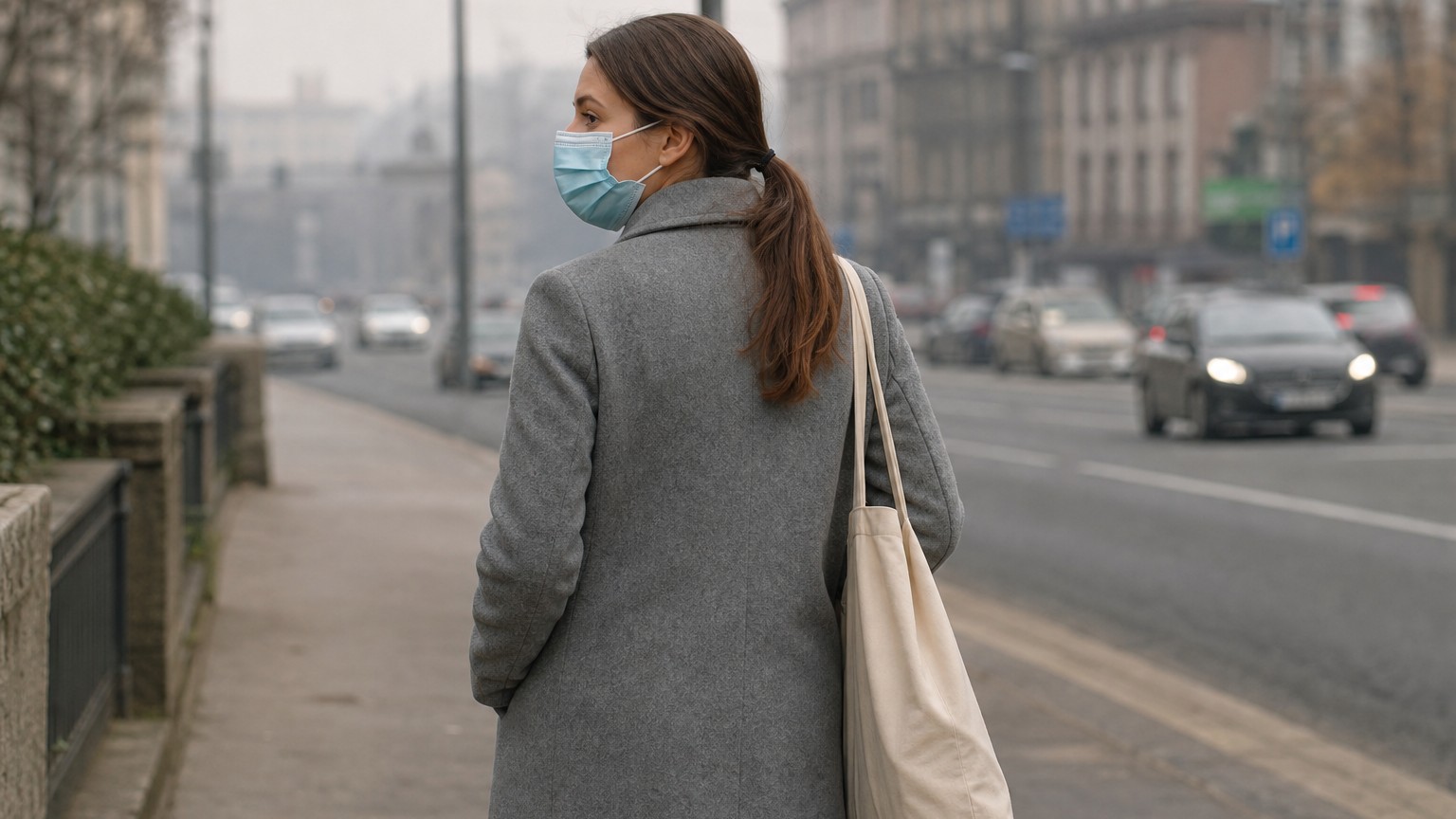
Air pollution is a daily reality for most of the world’s population. According to the World Health Organization, 99% of people live in places that do not meet its air quality guidelines, and the combined effects of outdoor and household air pollution are linked to millions of premature deaths each year. You cannot control every source of pollution around you, but you can meaningfully reduce how much of it you breathe and live with. This article separates what actually helps reduce exposure from what doesn’t — and it is general information, not medical advice.
What Air Pollution Does to the Body
Fine particles known as PM2.5 — small enough to reach deep into the lungs, and some can enter the bloodstream — are among the most studied pollutants. The U.S. Environmental Protection Agency (EPA) states that exposure to particle pollution is linked to premature death in people with heart or lung disease, nonfatal heart attacks, irregular heartbeat, aggravated asthma, decreased lung function, and increased respiratory symptoms such as coughing or difficulty breathing. The World Health Organization reports that most air-pollution-related premature deaths are due to heart disease and stroke, with chronic lung disease, lower respiratory infections, and lung cancer making up most of the rest. These are associations seen across large populations — they describe risk for groups, not certainty for any one person.
Who Is Most at Risk
Children, older adults, and people with heart or lung conditions — including asthma and COPD — are more sensitive to particle pollution, and the World Health Organization notes that women and children bear the greatest burden from household air pollution. Pregnant women are also considered more vulnerable — air pollution has been linked to low birth weight. If you or someone you care for falls into one of these groups, the exposure-reduction steps below matter most. Air pollution also falls disproportionately on people in lower-income communities, per the U.S. Environmental Protection Agency, which is one reason clean air is a public-health goal, not just a personal one.
Reduce Your Exposure Outdoors
Use your local official air-quality index or service to check today’s air quality — and where that information is available, note which pollutant is driving the reading, because the right steps differ by pollutant. During high particle events (elevated PM2.5, smoke, or heavy haze): spend less time outdoors, and avoid or reduce strenuous outdoor activity, per EPA guidance. Particle levels change through the day, so if you must go out, choose cleaner times and less polluted routes, and keep outings short. During heavy outdoor particle events — such as wildfire smoke or heavy haze — keep windows closed at home and in the car, and in the car run the air conditioning in recirculate mode to reduce intake of outside air. When poor air quality is driven by other pollutants (for example, ozone), follow your local official guidance, because the right steps can differ. People with asthma or heart or lung conditions should follow their action or treatment plan — including using reliever medication as prescribed — and talk to their doctor if symptoms change, as advised by UK public health guidance.
Reduce Your Exposure Indoors
People spend most of their time indoors, so indoor air matters a lot. Start with sources: don’t smoke indoors, avoid burning wood indoors, ventilate cooking with an exhaust fan (or a window when outdoor air is clean), and avoid unnecessary chemical sprays and heavily scented products, per EPA’s Guide to Air Cleaners in the Home. Ventilate with clean outdoor air when outdoor quality is good — and keep windows closed when it isn’t. A portable air cleaner with a HEPA filter can reduce fine particles in one room when it is correctly sized for that room: compare the Clean Air Delivery Rate (CADR) with the room size, and replace filters regularly. Air cleaners reduce particles; they do not remove every pollutant, and no device removes everything. For central heating and cooling, use a filter rated MERV 13 — or the highest your system can handle — and change it regularly. Avoid air cleaners that intentionally produce ozone — the EPA advises against using them in occupied spaces because ozone is a lung irritant.
Masks and Respirators: What They Can and Can't Do
During heavy particle events — wildfire smoke, heavy haze, or very high PM2.5 — a properly fitted NIOSH-approved N95 (or P100) respirator can reduce the particles you breathe in; NIOSH-approved N95 respirators filter more than 95% of PM2.5-sized smoke particles, per EPA guidance. Fit matters: if air leaks around the edges, protection drops sharply — and paint masks, dust masks, and surgical masks do not prevent smoke inhalation, per EPA guidance. Respirators are more protective than masks: they filter particles — but standard particulate respirators do not filter harmful gases or vapors, and a proper fit is what makes them work, per CDC guidance. They do not remove all pollution. Reducing exposure — and getting to cleaner air — comes before relying on a respirator. Respirators are an event-based tool, not everyday wear. Wearing one can be more effortful for people with heart or lung conditions and, especially late in pregnancy, can make breathing harder — if that applies to you, talk to your healthcare provider about whether and how to use one. During serious smoke or particle events, public-health guidance advises pregnant people to reduce their exposure; if they must go outdoors, a properly fitted NIOSH-approved N95 can be used, per CDC guidance on wildfire smoke and pregnancy. If you feel dizzy or breathless while wearing a respirator, remove it and move to cleaner air.
Healthy Habits Help — But They Don't Remove Pollutants
Balanced nutrition, hydration, and sleep support general health, but they have not been shown to remove pollutants from the body or to substitute for reducing your exposure. Some research has explored whether antioxidant nutrients — such as vitamins C and E and carotenoids — modify the effects of pollution exposure; per a 2018 research review, the evidence is limited and emerging, and it does not support eating or supplementing your way out of pollution exposure. And there is no good evidence that drinking warm water speeds the removal of pollutants from the body: hydration supports general health, but it is not a pollution detox treatment.
What Doesn't Work: Common Myths
Detox teas and “toxin-flush” routines. There is no good evidence that any of these removes pollutants from the body. Steam inhalation. Authoritative air-pollution guidance does not establish steam as a pollution treatment — reviews that studied steam did so for colds and respiratory infections, not air pollution — and hot steam can cause scald injuries, according to a joint NHS and British Burn Association public safety warning. Houseplants. Plants are lovely for well-being, but research — including the American Lung Association’s guidance — shows they do not meaningfully clean the air in real homes, so they are not a substitute for source control, ventilation, or filtration. “Pollution protection” supplements. No supplement has been established as a reliable way to protect against air-pollution exposure or as a substitute for exposure reduction.
Step C — add the 2 links:
When to See a Healthcare Professional
Seek urgent medical attention — via your local emergency services — if you or a family member experiences sudden or severe difficulty breathing, or significant chest pain or pressure, as outlined by Cleveland Clinic for smoke exposure. Contact a healthcare professional for symptoms that are new, persistent, or worsening but not severe — for example, a lasting cough, wheezing, or shortness of breath — especially if you have heart or lung disease, are older, or are caring for a child, per the American Lung Association. If you have asthma or a heart or lung condition, follow your treatment plan and get help early if symptoms get worse. This article is general information — only a healthcare professional can diagnose or treat you. For help, contact your local health services.
Cleaner Air Is a Shared Goal
Most sources of outdoor air pollution — transport, industry, energy, and waste — are beyond any individual’s control. The World Health Organization notes that cleaner-air policies save lives at scale and that clean household energy greatly reduces exposure where it is still needed. Supporting clean air in your community is part of protecting everyone’s health.
The Bottom Line
You can’t eliminate pollution exposure on your own — but you can meaningfully reduce it. Reduce exposure indoors and out. Use a properly fitted particulate respirator during heavy particle events. Keep healthy habits because they support your health, not because they “detox” you. Skip the unproven remedies. And get medical help when symptoms warrant it. Every step you take to reduce exposure is real protection — no miracle needed.