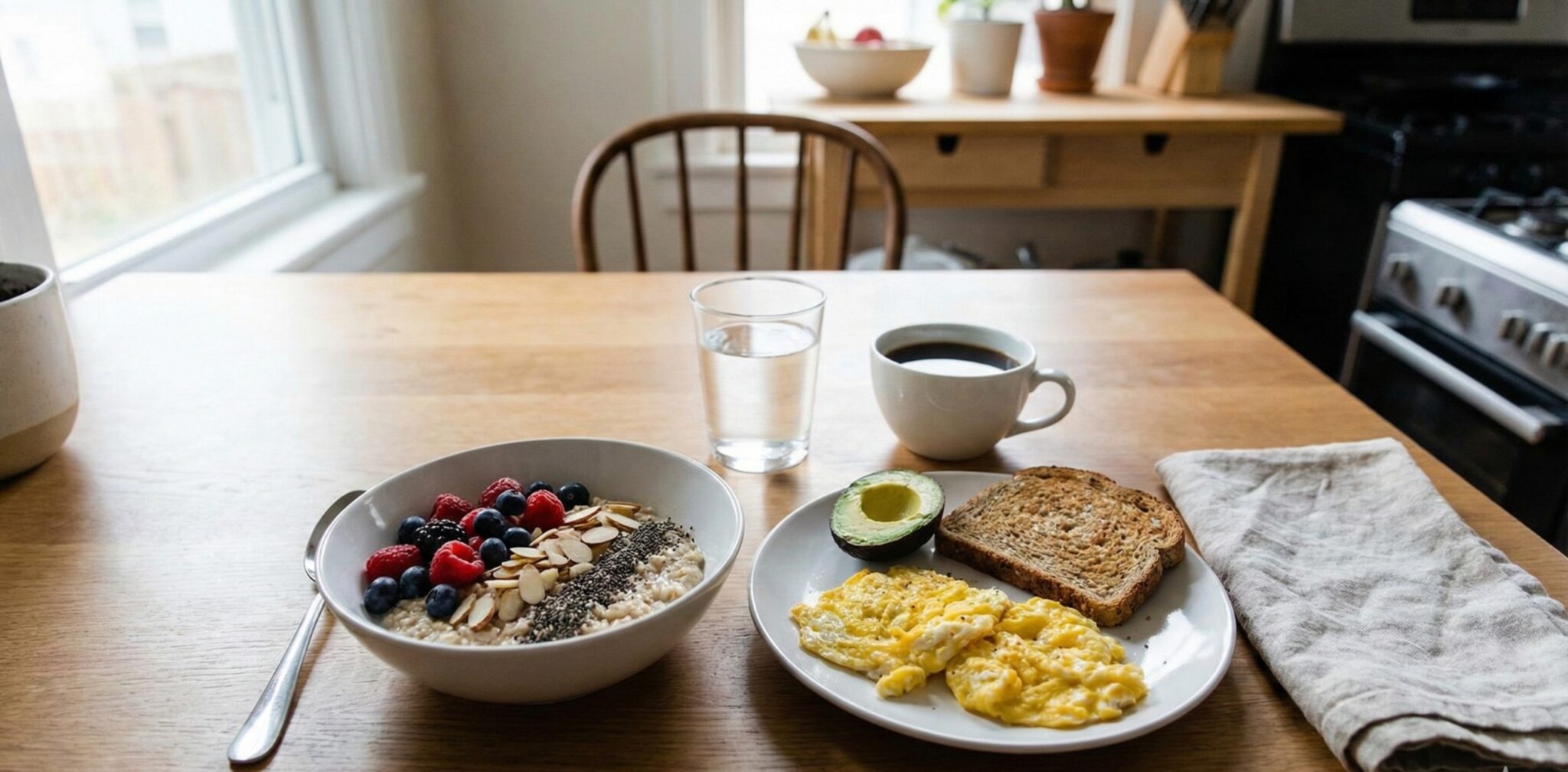
Healthy eating has a reputation problem. It sounds like a project — meal plans, calorie apps, lists of rules. But in practice it is much simpler: healthy eating is the food you reach for most days, and most of us already know roughly what that should look like. We just rarely stop to picture it clearly.
This guide focuses on the basics: what the main food groups contribute, which choices current guidance prioritizes, and how they can fit together in ordinary meals. Think of it as the plain-language version of what eating well actually looks like day to day.
What healthy eating actually means
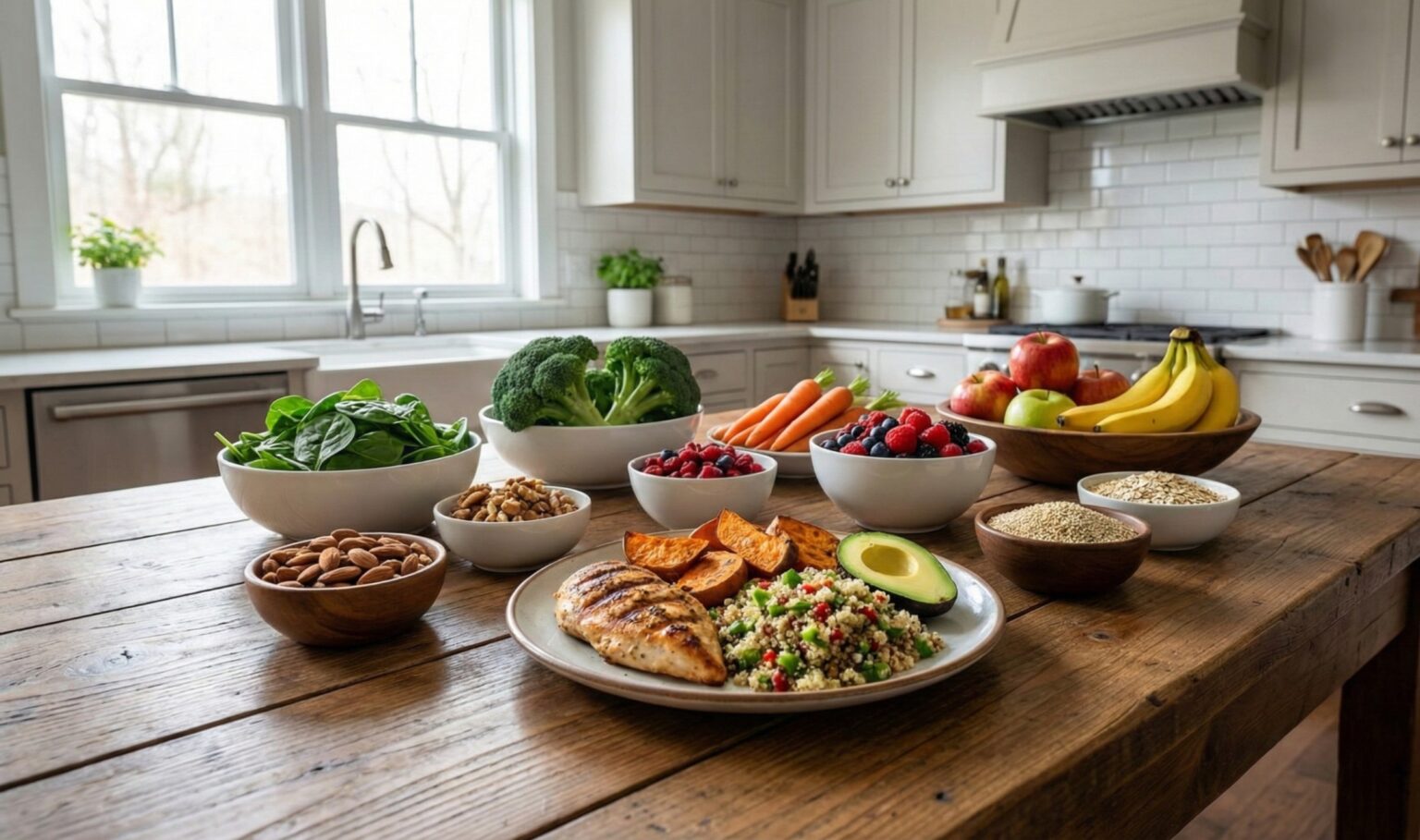
Healthy eating is a pattern, not a single meal and not a single “superfood.” A salad at lunch is good, but it is the meals you choose across a week that shape how you eat.
A useful way to think about food is how much it gives you per calorie. Vegetables, fruit, whole grains, beans, eggs, fish, lean meat, dairy and nuts carry a lot of the vitamins, minerals, protein and fibre your body actually uses. Foods such as sweets, sugary drinks and many highly processed snacks can contribute substantial calories, added sugars or sodium without the same concentration of useful nutrients as more nutrient-dense choices. Eating well mostly means letting the more nutrient-dense group lead.
Build around nutrient-dense foods
The current Dietary Guidelines for Americans — the federal government’s evidence-based advice — describe a healthy pattern built from the same broad groups year after year: vegetables, fruit, whole grains, protein foods, dairy or alternatives, and healthy fats. Notice what that list does not include: no exotic ingredients, no single miracle food, nothing you have to order online.
The groups are simple to understand. Vegetables and fruit supply vitamins, minerals and fibre. Whole grains give you carbohydrate along with the fibre and nutrients that heavily refined versions have lost. Protein foods — beans, lentils, eggs, fish, poultry, lean meat, nuts and seeds — help build and maintain body tissue. Dairy, or fortified alternatives, provides protein and calcium. And fats from oils, nuts, seeds, avocado, seafood, eggs and dairy are a normal part of the diet.
Make vegetables and fruit easy to repeat
Vegetables and fruit earn their place in every healthy pattern, so it is worth making them easy to reach for. If including them regularly is difficult, convenience matters: keep easy options around and they become simpler to use.
Keep a bag of frozen vegetables for nights when fresh ones have gone sad in the drawer. Buy whatever fruit is in season — it usually tastes better. Add a handful of spinach to the pan when you cook eggs or pasta. Put fruit where you will see it, not hidden at the back of the fridge. Frozen and canned options can be useful too; when relevant, choose canned vegetables with less sodium and fruit with little or no added sugar.
The aim is simply to make vegetables and fruit a regular part of the overall pattern.
Choose whole grains more often
Grains are not the enemy, and anyone telling you to cut carbs has oversimplified a fairly simple topic. The useful distinction is between whole grains and heavily refined ones.
Whole-grain versions of everyday foods — whole-wheat bread and pasta, brown rice, oats — still contain the whole kernel of the grain. Refining removes the bran and germ, which lowers the fibre content and takes out some naturally occurring nutrients, even though some refined products are enriched with nutrients afterwards.
Current guidance prioritizes fibre-rich whole grains and recommends reducing heavily refined carbohydrate choices. That makes swapping an easy win: whole-wheat bread instead of white, brown rice instead of white, whole-wheat pasta when you would usually buy regular.
Include protein foods that fit your diet
Protein foods are flexible because there are so many good sources. Eggs, beans, lentils and chickpeas, fish, poultry, lean meat, nuts and seeds — and dairy, if you eat it — all belong in this group. The useful general lesson is variety: include protein foods regularly and use a mix of animal or plant sources that fits the way you eat.
For a general healthy-eating pattern, protein powders, special bars and high-protein plans are not necessary for everyone. Everyday foods can provide plenty of useful protein choices. A serving of protein alongside vegetables and a grain — eggs at breakfast, chicken or beans in a lunch bowl, fish or lentils at dinner — keeps everyday meals balanced.
Beans and lentils are especially useful because they provide both protein and fibre and work well in batch-cooked meals.
Don't forget fats — and dairy or alternatives
Dietary fat is a normal part of a healthy eating pattern. Current U.S. guidance includes fats from foods such as nuts, seeds, olives, avocado, seafood, eggs and dairy, and recommends prioritizing oils such as olive oil when you are adding fat in cooking. It also keeps an overall limit on saturated fat, which is found in varying amounts in foods such as butter, fatty meats, coconut oil and palm oil.
In practice, foods such as avocado, nuts and seeds, along with oils such as olive oil, can all fit into a healthy eating pattern.
Dairy deserves its own mention because it is easy to forget. Milk, yoghurt and cheese provide nutrients including protein and calcium. For people who do not use dairy, fortified dairy alternatives can also be options.
Plain yoghurt can be an easy way to include dairy and provides nutrients including protein and calcium.
What's worth limiting
Sugar-sweetened drinks are one straightforward place to reduce added sugar. Water or other unsweetened drinks are practical everyday alternatives.
Beyond drinks, current guidance recommends reducing highly processed foods, especially choices high in added sugars, sodium and refined carbohydrates, so they do not dominate the overall pattern.
None of this makes “processed” a bad word. Foods such as bread, yoghurt, canned beans, pasta and frozen vegetables are all processed to some degree, and many are everyday staples of a healthy diet. The useful question is what a food contributes to the overall pattern — which is also why the guidance targets highly processed foods rather than everything that comes in a package.
If packaged snacks are something you buy regularly, our guide to reading snack labels can help you compare them more carefully.
A simple way to put it together
For a simple meal, start with vegetables or fruit, include a protein food, and add a whole-grain or other nutrient-dense carbohydrate where it fits. Dairy or a fortified alternative and healthy fats can be part of the wider day as appropriate. The exact proportions will vary with the meal and the person — there is no single formula to memorise.
If you want to start simply, choose one practical change — whole-grain bread instead of white, a piece of fruit with lunch, or water instead of a sugary drink. Healthy eating is not about making one perfect meal; it is about the overall pattern of choices you make regularly.
If fitting favorite foods into a healthier overall pattern is the part you find hardest, see our guide to eating well without giving up your favorite foods.