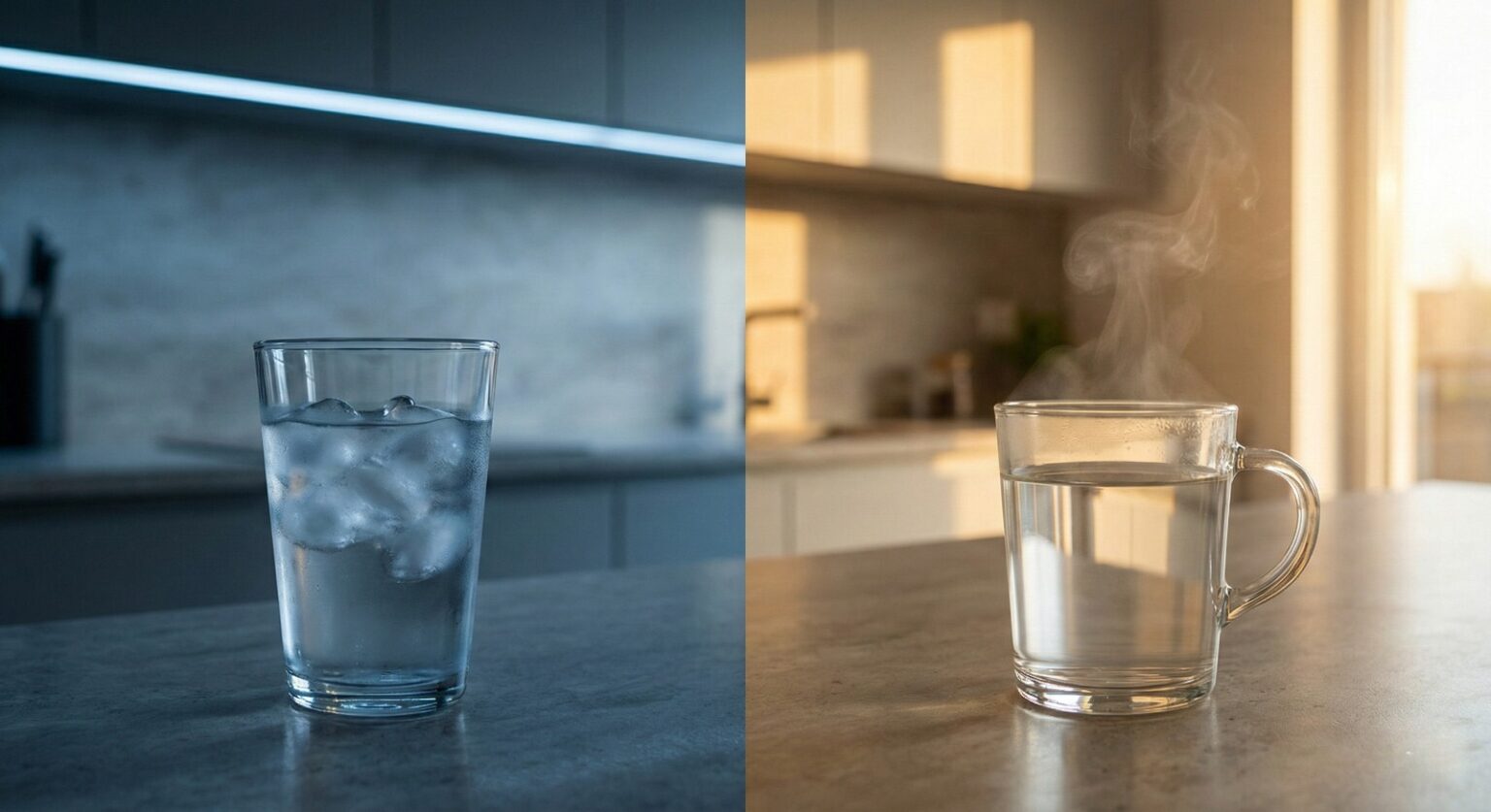
You have probably heard it both ways: warm water soothes the stomach, cold water shocks it. Some traditions swear by warm water first thing in the morning. Other people are sure that iced water after a meal is a mistake. The honest answer is simpler than either claim. For most healthy people, there is no established need to choose a specific water temperature for better digestion. If you like warm water, drink it. If you prefer cold, that is fine too. What matters far more is that you drink enough water — and that you do not let a glass of water stand in for a medical check-up when something actually feels wrong.
Where the "warm water for digestion" idea comes from
Warm-water advice is old. It comes from traditional health systems and everyday folk wisdom in many parts of the world, where a warm drink is associated with comfort, care and settling the stomach. There is nothing wrong with enjoying that tradition. But a long history does not make a claim medical evidence, and most of the specific explanations attached to warm water — that it “activates” digestion or “wakes up” the gut — do not come from research. They are ideas that sound reasonable, which is exactly why they spread.
What small studies actually show
The scientific picture is thinner and more mixed than either side of the argument suggests. Consider three examples.
A 2019 study of 11 healthy young men found that water at 2°C — nearly freezing — lowered the frequency of stomach contractions in the hour that followed, and the men went on to eat less at the next meal. That is a real, measurable laboratory observation. It is also a single, small, short-term study of one group, which is not the same as evidence that cold water is harmful to digestion in everyday life.
An older study of liquid meals found that a very cold drink emptied from the stomach more slowly at first than a drink at body temperature, while the difference for a warm drink was not statistically significant. The same study measured the stomach’s contents warming back toward body temperature within roughly half an hour. In other words: temporary, small, and quickly reversed.
A recent small study in older adults measured emptying after protein drinks at 4°C, 37°C and 60°C. The 37°C and 60°C drinks showed faster emptying in the first 5–10 minutes than the 4°C drink.
Put the three together and the results point in different directions depending on the study, the drink, the temperature and the people tested. That inconsistency is the real finding — not “warm wins” or “cold loses.” There is an important difference between a change measured in a laboratory and a benefit you can feel. A stomach that contracts a little more or a little less for a short while after an unusually hot or cold drink is not a stomach that has been helped or harmed. Short-term physiological effects do not automatically translate into better or worse digestion.
Common warm-water claims that go too far
A whole set of popular claims treats the gut like plumbing. Warm water is said to switch on digestive enzymes, improve blood flow to the stomach, break food down faster and flush waste away. None of these has good supporting evidence, and several rest on a misunderstanding of how digestion works.
The basic work of digestion depends on stomach acid, bile, digestive enzymes and movement through the gut. Drink temperature can temporarily affect stomach activity in small studies, but that is very different from the claim that cold water “solidifies” dietary fat: fats are digested with the help of bile and enzymes produced by the liver and pancreas. The older emptying study is a useful reminder here too — the stomach warms a cold drink back toward body temperature fairly quickly, so any temperature effect from a single drink is short-lived.
The “flush” idea deserves a special mention. Warm water is sometimes described as flushing toxins or waste from the system, but there is no good evidence that warm water acts as a detox or cleanse. If you enjoy warm water in the morning, enjoy it — just do not drink it expecting a cleanse.
Is cold water bad after meals?
For a healthy person, there is no established general medical rule that says you must avoid cold water after meals. Small studies show that temperature can temporarily affect stomach or esophageal activity, but that is not evidence that ordinary cold water after meals harms digestion in healthy people, causes bloating, or creates “weak digestion.” Some people do notice that very cold drinks feel uncomfortable, and that is a perfectly good reason to choose something warmer. Personal comfort is a legitimate guide. It is just not a medical rule, and there is no reason to feel guilty about drinking cold water with or after a meal if it agrees with you.
When temperature might matter
There is one genuine exception worth knowing about, and it belongs to a specific medical condition, not to healthy readers. Achalasia is a disorder of the esophagus in which food has trouble moving into the stomach. The evidence here comes from two small studies with different designs. In one study of people with untreated achalasia, very cold water raised pressure in the esophageal sphincter and lengthened contractions, and symptoms were worse; warmer water produced changes in the opposite direction. A separate small manometry study found that temperature-related responses differed among the groups — people with achalasia, people with other swallowing problems, and healthy participants — which shows that temperature can affect the esophagus in the laboratory even in people without disease. Both studies are small and their results are not identical. The important point is this: these findings do not show that cold water is harmful for healthy people, and they do not mean healthy people need to manage their water temperature. The symptom-based advice from the untreated-achalasia study belongs to people with that diagnosed condition and should not be generalized. Difficulty swallowing deserves a proper evaluation — not a temperature experiment.
What matters more than water temperature
For day-to-day digestion, the variables that actually matter are the ones that sound boring: eating regular meals, getting enough water overall, and paying attention to foods that disagree with you. Health organizations take a similar view — research comparing warm and cold water directly is limited, and for most people the choice comes down to comfort and habit. Our guide to the best foods for digestion covers the food side of that equation.
And if gas, bloating or heartburn-type discomfort is the real problem, it will not be solved by switching water temperatures. Our guide to gas, bloating and heartburn home care explains what is worth trying and when a symptom deserves a doctor. Persistent digestive symptoms deserve a closer look, not a colder or warmer glass of water — and if you have been told your digestion is “weak,” our article on what “weak digestion” really means is a good place to start.
The bottom line
Warm water is a pleasant habit. Cold water is a pleasant habit. Neither is a digestive treatment, and current evidence does not establish that ordinary warm or cold water harms digestion in healthy people. (Very hot, scalding drinks are a separate matter — this article is about ordinary drinking temperatures.) The research is limited, the results are mixed, and the practical takeaway is refreshingly unglamorous: stay hydrated, eat well, and let your own comfort choose the temperature. If symptoms are persistent or worrying, see a doctor — that advice does not change with the weather, or with the water.