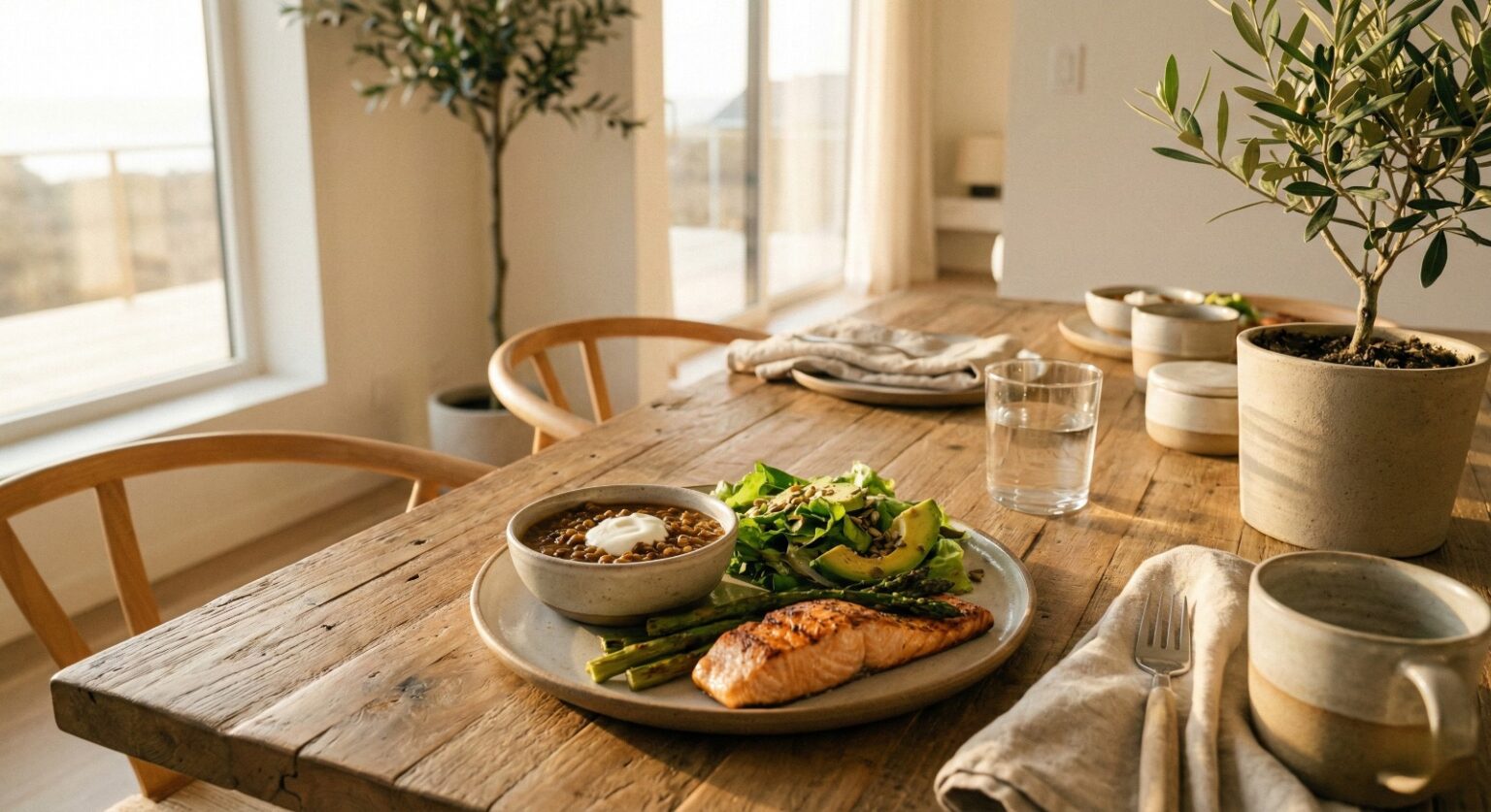
Let’s answer the question behind the title straight away. Can you eat healthier and still keep the foods you love? For most people, yes. A balanced eating pattern does not require every meal to be perfect. Eating well is about the overall shape of what you eat over days and weeks, and about practical choices that make that shape better. This guide keeps the foods you enjoy on the table and shows how to build the rest of your eating around them — without guilt and without extremes.
One meal doesn't define your diet
Strictly speaking, no single meal decides whether you eat well; the overall pattern does. Current U.S. federal guidance — the Dietary Guidelines for Americans 2025–2030, published in January 2026 — centres on prioritizing whole, nutrient-dense foods such as vegetables, fruit, whole grains, protein foods, dairy and healthy fats, within broader healthy eating patterns.
The Dietary Guidelines are not a licence to treat every food as equal, and they do not claim that “anything goes.” The practical flexibility point comes from the UK’s NHS Eatwell Guide instead: you do not need to achieve the right balance at every meal, because the aim is to get the balance right over a day or even a week. So a rich dinner or a favourite snack is not, by itself, the measure of your diet. What counts is what the balance looks like across the day and the week.
A balanced diet isn't a perfect scorecard
You do not need to score every meal against a perfect plate. The NHS Eatwell approach looks at balance across a day or even a week, not at whether every individual meal is ideal. A celebration meal, takeaway or favourite snack can simply sit inside that wider pattern. Food does not need to be divided into perfect eating versus cheating; it can simply be food, eaten in sensible amounts, most of the time. A meal that is mostly about enjoyment — a celebration, a takeaway, a favourite snack — is not a failure that needs to be “made up for.” It is just part of the pattern.
Keep your favourites — change what surrounds them
You do not have to say goodbye to your favourite foods to eat well. What you can do is change the context around them. The UK’s NHS Eatwell Guide puts it in plain words: foods and drinks high in fat, salt and sugar should be eaten less often and in smaller amounts — not never.
Practical versions of that idea: if a rich dessert is the part of the meal you love, enjoy it in a smaller portion instead of pretending you will skip it forever. If chocolate is something you enjoy, you do not have to replace it with a food you dislike simply because it sounds healthier. The practical question is how often you have it, how much you have, and what the rest of your eating pattern looks like. Add more vegetables, fruit, whole grains and other nutrient-dense foods around the foods you enjoy, so the plate and the week lean in the right direction. A wholegrain version can be a useful swap when it is something you genuinely enjoy eating.
One honest note: adding a salad next to a pizza does not “cancel out” the pizza. That is not how this works — no single food is neutralised by another. The point is the overall pattern across the day and the week, not arithmetic on individual foods.
Try adding before you start banning foods
One simple approach is to look first at what you can add to the diet, rather than making a long list of foods to remove. If a pasta dish is your comfort food, add a handful of vegetables or a side salad to the plate. If you like bread, try the wholegrain version when it genuinely tastes good to you. Put fruit next to your usual breakfast. Choose water more often alongside meals when that feels natural. Swap one thing at a time — not a kitchen-wide overhaul on a Monday morning.
This is a practical nutrition strategy, not a judgement about individual foods. The goal is to let the nutrient-dense foods take up more room in your pattern, one easy change at a time.
Portions and frequency matter — but not more than the pattern
Both what you eat and how much of it you eat matter. For foods high in fat, salt or sugar, smaller amounts and less frequent intake can be practical ways to fit them into the broader diet. If a treat shows up every day in a large portion, easing the size or the frequency will help the overall pattern. If your favourite foods are already occasional and reasonable, you may not need to change anything about them at all.
There is no single portion rule that fits every food or every person. Pay attention to the amount you actually eat, and use the broader eating pattern as the context.
Do you need a "cheat meal"?
No. You do not need the label “cheat meal” to describe a food you enjoy. The practical question is how that food fits into the overall eating pattern — not whether it belongs in a “good” or “bad” column. If food ever feels like a constant struggle rather than everyday eating, it is worth mentioning to a health professional; that is a conversation for you and them, not something an article can answer.
A realistic way to build your week
None of this needs to become a complicated plan. A sensible week can look like this:
- Build most meals around foods that contribute useful nutrients — vegetables, fruit, whole grains, proteins, and dairy or alternatives.
- Keep room for foods you genuinely enjoy, without arbitrary percentage rules or “cheat” labels.
- For foods high in fat, salt or sugar, ease the amount or how often they show up.
- Make one or two realistic additions or swaps you actually like, rather than overhauling everything.
- Think about the balance across a day or even a week, rather than judging one isolated meal.
That is the whole method: simple, flexible and practical.
The bottom line
Eating well is a long-run pattern, not a single perfect day. Keep the foods you love in reasonable amounts, let nutrient-dense foods take up more room, and judge your balance over a day or a week rather than by one plate. If packaged snacks are among your favourites, our guide to reading snack labels can help you choose versions you enjoy with your eyes open. The goal is not a perfect diet — it is a better pattern you can actually live with.